Analysis of the Global X Uranium ETF

10 JUN, 2024
By Andrea Sepúlveda from LatamSelf



The Global X Uranium ETF, produced by Global X, is a thematic investment tool in the global equity sector - mainly in developed countries - domiciled in the United States, launched at the beginning of 2010 and has received distinctions and ratings from major financial information platforms worldwide.
Below we see its features and the opportunities it offers to investors.
Features of the Global X Uranium ETF
Global X explains that this ETF represents a great investment opportunity as uranium will likely play a key role in the global energy transition - a topic much discussed by political and environmental movements, as well as by large global asset management companies. In particular, Global X indicates that, according to energy associations' forecasts, the demand for reactors could go from about 65,000 metric tons in 2023 to almost 130,000 in 2040, doubling in less than 20 years. Therefore, an increase in uranium extraction and price is also foreseeable.
This increase in demand is understandable as governments are increasingly committed to reducing dependence on fossil fuels, leaving room for nuclear energy which is a reliable method for generating clean electricity, with zero direct emissions during its operation.
Thus, in the investment world, it has been seen that more and more is being talked about uranium and how to expose one's portfolio to it, compared to exposure to other more common commodities, such as oil or gold. However, the uranium industry involves different types of companies, so to take advantage of the entire production chain of this raw material, a uranium ETF would be the most appropriate to access a diversified basket of companies dedicated to uranium extraction worldwide.
This ETF (URA - ETF ticker) offers investors access to a wide range of companies dedicated to uranium mining and the production of nuclear components, including those involved in extraction, refining, exploration or manufacturing of equipment for the uranium and nuclear industries. For this purpose, URA uses the Solactive Global Uranium & Nuclear Components TR index as a benchmark.
Global X indicates that, typically, the ETF will follow an index replication strategy. However, the ETF may use a representative sampling strategy when a replication strategy could be harmful or disadvantageous to investors, for example when there are practical difficulties or substantial costs to compile a portfolio of equity securities that replicates the index, even if it is expected that the correlation between the ETF's return and that of the index, net of fees and expenses, will exceed 95%.
- Manager: Regarding the manager, Global X ETFs is a member of Mirae Asset Financial Group, a global company based in Seoul that offers asset management services worldwide. Global X manages over 57 billion USD in ETFs listed worldwide.
- Assets: as of the end of April 2024, the strategy had over 3 billion USD in assets under management.
Evolution of the Global X Uranium ETF
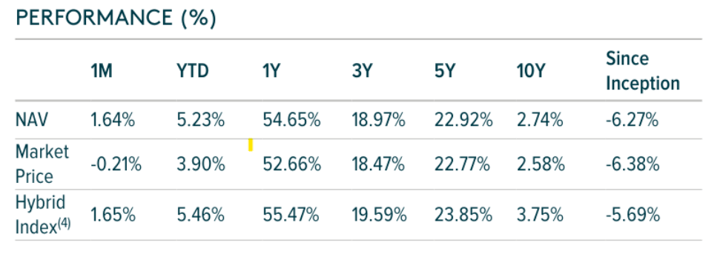
Note: Past performance does not predict future returns. The fund's returns may increase or decrease due to exchange rate fluctuations.
The ETF had a return of 3.90% at the end of April, which is considered conservative when analyzing its risk level.
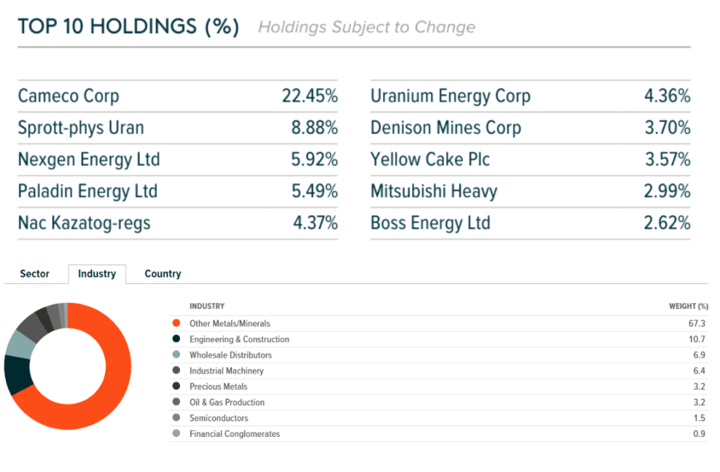
The ETF at the end of April this year has 50 titles as underlying instruments. From the first 10, it can be seen that the ten most invested companies represent more than 60% of the ETF, constituting the key companies of the investment.
On the other hand, it can be seen that the ETF invests in energy, industrial and materials sectors, as uranium mining companies, exploration and others that support the technology related to the uranium industry are involved.
Conclusions
Advantages
- Globally recognized manager for its thematic ETFs. Institutional dimensions and track record over 10 years.
- Theme declared by many as a current growth trend.
Disadvantages
- Thematic investment considered by many as satellite to the portfolio.
- If there is conviction, a review of correlations and returns with main positions may be necessary.