Analysis of the Securis Catastrophe Bond Fund Class I USD Acc

13 JUL, 2026
By Xiaoying Zhou from RankiaPro
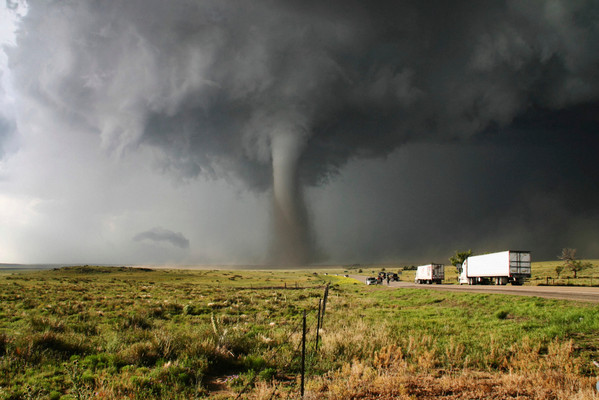


Catastrophe bonds have moved from a niche institutional allocation to a genuine portfolio diversifier, as investors look for returns that don't move with equity or credit cycles. The Securis Catastrophe Bond Fund, managed by Securis Investment Partners LLP within Twelve Capital UCITS ICAV, has pursued this strategy since 2016.
In February 2026 the fund launched Class I USD Acc (IE000GAD1XG3), a new institutional share class with a USD 1 million minimum investment. This analysis focuses on that class, which sits alongside the fund's longer-running institutional and retail-institutional share classes.
Investment thesis
The fund invests primarily in catastrophe bonds ("Cat Bonds"), insurance-linked securities that transfer the financial risk of natural catastrophes, hurricanes, earthquakes, windstorms and wildfires, from insurers, reinsurers, corporations and governments to capital market investors. Coupons compensate investors for assuming this risk; principal can be reduced if a qualifying event occurs. The fund held 141 positions as at 31 March 2026.
The catastrophe bond market has grown to a record outstanding of around USD 60 billion, with primary issuance running above USD 7 billion year to date (See: factsheet commentary, March 2026). This reflects insurers' growing use of capital markets to manage catastrophe exposure as traditional reinsurance capacity tightens, a dynamic also tracked by supervisory bodies such as EIOPA in their insurance risk transfer work.
Unlike conventional fixed income, cat bond returns are structurally driven by insurance risk premia rather than credit spreads or interest rate cycles, offering genuine diversification. The fund's target of risk-free +4% to +5% net sits within typical category ranges, while the portfolio's gross yield of 7.42% (source: factsheet) reflects currently elevated spreads following recent hurricane seasons.
Investment process and management team
Securis Investment Partners LLP, authorised and regulated by the FCA and registered with the SEC, has run this strategy since the fund's 2016 launch. The fund transferred into Twelve Capital UCITS ICAV via merger, effective 26 January 2026, with Twelve Capital AG (the ICAV's promoter) appointing Securis as sub-investment manager under a formal agreement (source: factsheet; Annual Report 2025).
The ICAV itself is an Irish umbrella structure authorised by the Central Bank of Ireland under the Irish Collective Asset-management Vehicles Act 2015, currently comprising five active sub-funds alongside Securis Catastrophe Bond Fund (source: Existing Funds Supplement, 7 April 2026). Day-to-day portfolio management continues unchanged; only the legal wrapper and Twelve Capital's governance layer are new.
The process favours primary market transactions from well-resourced sponsors, with the manager explicitly noting it avoided "transactions which in our view were testing market tolerances" during March 2026 (source: factsheet commentary). Internal modelling, the "Twelve Securis View of Risk", overlays third-party catastrophe models (Moody's, Verisk) with proprietary adjustments. The portfolio remains overwhelmingly concentrated in Cat Bonds, consistent with the stated objective; no material style drift is evident.
Return and risk analysis
Class I's own track record is still quite short to assess. As a proxy for the underlying strategy, Class A USD (actual, 0.65% management fee, the fund's principal institutional-fee class) has returned +64.13% cumulatively since 2018 inception, with an annualised return of +6.26%, a Sharpe ratio of 1.13 and 85% positive months.
The 12-month forward Estimated Return Distribution illustrates the shape of this risk: a median projected net return of 6.48%, but a 1-in-100 scenario of -22.98%. This is the classic cat bond pattern, steady carry-driven gains in most months, punctuated by sharp losses if a qualifying catastrophe occurs. Historic monthly data confirm this: Class A posted -5.52% in September 2022, its largest monthly drawdown on record, without a full capital loss.
Class I's higher 0.925% management fee versus Class A's 0.65% implies a modest net return drag, all else equal, though this should be weighed against the class's lower minimum relative to some legacy institutional classes and its recent launch pricing.
Current positioning
The portfolio spans multiple perils, with US earthquake and Florida windstorm risk contributing the largest shares of expected loss, followed by other US windstorm regions, reflecting the depth and liquidity of the US cat bond market relative to European or Asian equivalents. Average term to maturity remains short, limiting the risk of catastrophe exposure stacking across multiple hurricane seasons within a single position.
The fund uses forward currency contracts for hedging and share-class currency management rather than for investment exposure, consistent with the general UCITS framework governing the ICAV, under which derivative use for hedging or efficient portfolio management is permitted within defined exposure limits (source: Prospectus, April 2026). Individual position sizes are modest and spread across numerous Bermuda- and Cayman-domiciled special purpose vehicles, though sector concentration in insurance-linked securities is total by design, an inherent feature of the strategy rather than a manager choice.
ESG analysis
The fund is classified under Article 8 of SFDR, promoting environmental and social characteristics without pursuing a sustainable investment objective. Its declared characteristic is supporting global resilience by financing the redevelopment of housing, businesses and infrastructure after catastrophic events, particularly climate-related perils. During the reporting period at least 80% of assets were held in bonds assessed under the manager's proprietary ESG process, with at least half specifically supporting climate-resilient communities. The Prospectus separately flags a general dependency on third-party ESG data, which it acknowledges "may be incomplete, inaccurate or unavailable" (source: Prospectus, April 2026), a caveat worth bearing in mind alongside the fund's own reporting. This is a coherent, if narrow, ESG framing rather than a broad sustainability overlay.
Main risks
| Risks | Description | Mitigating factors |
|---|---|---|
| Catastrophe (tail) risk | Returns depend on the absence of qualifying catastrophic events; a major hurricane or earthquake could reduce principal. | Diversification across 141 positions, multiple perils and geographies; internal modelling overlaying third-party catastrophe models. |
| Peril concentration | US earthquake and windstorm perils account for the largest share of expected loss. | Exposure spread across many sponsors and vintages; average term to maturity kept short, near 1.7 years. |
| New share class, limited track record | Class I launched in February 2026 has no meaningful performance history of its own. | Invests in the same underlying portfolio as the fund's longer-running classes, active since 2016. |
| Liquidity risk | Cat bonds can trade thinly in secondary markets, particularly outside primary issuance windows. | Weekly dealing frequency with defined redemption notice; liquidity monitored by the manager on an ongoing basis. |
| Structural and counterparty risk | Insurance-linked structures depend on collateral arrangements and SPV mechanics; as an umbrella ICAV, cross-border enforcement could theoretically test the segregation of liability between sub-funds. | Segregated liability between sub-funds under Irish law; standard UCITS depositary oversight (UBS Europe SE); formal counterparty due diligence. |
Synthesis and assessment
The Securis Catastrophe Bond Fund offers genuine diversification away from traditional credit and duration risk, with an attractive current yield reflecting the post-hurricane-season spread environment, though this comes bundled with tail risk that is structurally different from conventional fixed income drawdowns. Class I extends this exposure to institutional allocators at a USD 1 million entry point.
It fits best as a satellite or diversifying allocation within an alternatives or insurance-linked securities sleeve, rather than as a core fixed income substitute, given professional investors are the intended audience. A material change in the manager's risk discipline, an unusually severe or correlated multi-peril loss season, or Class I failing to build sufficient scale, would be the clearest triggers to revisit this thesis.
Disclaimer: This analysis was prepared based on publicly available information for the Securis Catastrophe Bond Fund I USD Acc (IE000GAD1XG3) as of March 31, 2026; including the ICAV Prospectus (7 April 2026), the Existing Funds Supplement (7 April 2026), the factsheet, the 2025 Annual Report and the SFDR Annex IV periodic disclosure provided by the manager. It does not constitute investment advice, nor an offer to buy or sell shares. The professional investor must carry out their own due diligence. Past performance does not guarantee future returns.