ECB poised for a September hike, but the path beyond divides opinion

7 SEPT, 2026
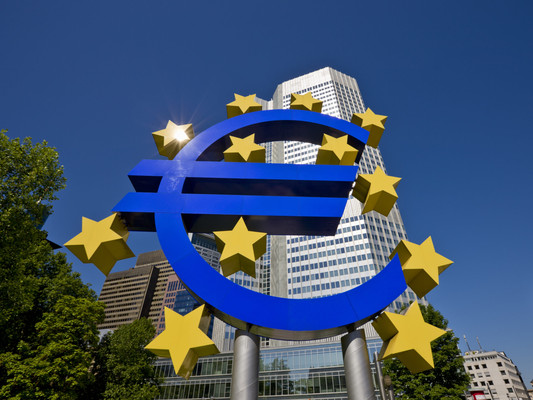


A September rate increase from the European Central Bank has moved from probable to near-certain, according to a cross-section of asset managers and economists, even as views diverge sharply on how much further the tightening cycle has to run.
A hike that's all but priced in
Konstantin Veit, Portfolio Manager at PIMCO, states plainly that 'in the September meeting, the ECB will raise the deposit rate (DFR) by 25 basis points, bringing it to 2.5%,' adding that 'after September, we expect a prolonged pause, although any emerging risks to inflation expectations could push the ECB to continue its rate-hiking policy.' Florian Spaete, Senior Fixed Income Strategist at Generali AM, agrees the move is fully discounted: 'markets are now fully pricing in a 25 basis point hike in September, and almost two more by the summer of 2027.' Thomas Hempell, Head of Macro & Market Research at Generali Investments, is even more direct: 'a rate hike from the ECB this month seems very likely,' though he warns that 'the subsequent hikes currently priced in by markets seem much less certain.' Josep Soler, Founder and Executive Advisor of EFPA España, frames the shift through household borrowing costs: 'the evolution of the Euribor towards levels of 3% reflects a change in expectations that originates, mainly, from inflation,' and 'increasingly we see not only one rate hike before year-end as likely, but probably two, or a hike of 50 basis points instead of 25.'
Growth holding up, with some cracks
Luca Simoncelli, Investment Strategist at Invesco, describes an aggregate macroeconomic picture that 'still reflects a solid level of activity, but one that coexists with growing frictions in capital allocation.' He notes that 'the global PMI index rose in August to 53.5, consistent with growth well above potential, but the expansion in services is matched by a manufacturing cycle showing slight fatigue.' On the US labour market, he writes that 'the report on the labour market defuses fears of a decline in consumption, with payroll growth above expectations and an unemployment rate stable at full-employment levels.' Hempell echoes the resilience theme for Europe: 'the eurozone has withstood the Iran and energy shock well: GDP in the second quarter rose 0.4% quarter-on-quarter, and growing optimism reflected in surveys (PMI, Ifo, ZEW, ESI) bodes well for the outlook.'
Inflation: near the peak, not yet contained
Veit projects that 'inflation will likely peak around 3.5% in the second half of this year,' noting 'core inflation has risen to around 2.5% and is probably also near its peak.' He expects 'the ECB's new projections to indicate slightly higher headline inflation for 2027, with the core inflation trajectory broadly unchanged.' Soler takes a more cautious view of the transmission mechanism: 'even in the scenario, difficult today, that the conflict ended immediately, the effect on inflation would not disappear at the same time,' since 'there is a lag between the rise in energy prices and its transmission to other products,' meaning 'we can still expect two or three months of elevated inflation even in that more favourable scenario.'
How far does the ECB go?
Veit lays out the Committee's likely reasoning: 'if the ECB actually manages to conclude its hiking campaign at 2.5%, we believe it will aim to preserve the valuable room for manoeuvre of conventional monetary policy, and will be unlikely to reverse the course of hikes next year.' He adds that 'any further hikes would take the DFR above the upper limit of the ECB's neutral rate estimates, and would probably require a new energy shock, evidence of second-round effects on wages, or a de-anchoring of inflation expectations – currently none of this is reflected in the data.' Spaete is similarly measured on duration: 'we believe markets have gotten ahead of themselves in their ECB forecasts,' expecting 'only one additional hike in the fourth quarter, since signs of more pronounced second-round effects or an acceleration in wage pressure remain limited.' Still, he cautions that 'term premiums should continue to rise, since bond volatility remains elevated, uncertainty about inflation remains high, and public debt ratios continue to rise while the ECB continues with balance sheet reduction.'
Markets and positioning
Simoncelli flags a structural shift in long-term yields: 'hyperscalers are moving from a cash-flow financing structure to a massive campaign of bond issuance,' with 'the growing supply of corporate bonds now on a collision course with sovereign debt, pushing up risk premiums on the long end of the curves.' He also points to the unwinding yen carry trade – 'global liquidity is pricing in the instability of the Yen carry trade' – and sees 'gold as an important asset for monetising the risk of monetary de-basement.' Hempell describes his own positioning as 'a cautiously risk-friendly bias centred on credit,' explaining that 'credit remains our preferred way of expressing this view, thanks to healthy balance sheets and strong demand in an environment of attractive total yields,' while holding 'only a small overweight in equities, since September's seasonality is unfavourable.'
The bottom line
Across the five views, the message is consistent: a 25-basis-point ECB hike in September is close to a formality, growth on both sides of the Atlantic remains firmer than many expected, and inflation – while past its peak in most forecasts – has not loosened its grip enough to justify complacency. As Hempell puts it, 'a vulnerability lies mainly at the long end of the bond markets' – and it's there, more than in the September decision itself, that the real disagreement among these experts lies.
Sources: PIMCO, Generali AM, Generali Investments, EFPA España, Invesco
Disclaimer: This analysis was prepared based on public commentary and market previews provided by PIMCO, Generali AM, Generali Investments, EFPA España, and Invesco as of September 7, 2026. It does not constitute investment advice, nor an offer to buy or sell any financial instrument. The professional investor must carry out their own due diligence. Past performance does not guarantee future returns.