Trump, Xi and Putin meet in Shenzhen: what the first trilateral summit means for markets

20 NOV, 2026
By Joanna Piwko from RankiaPro Europe
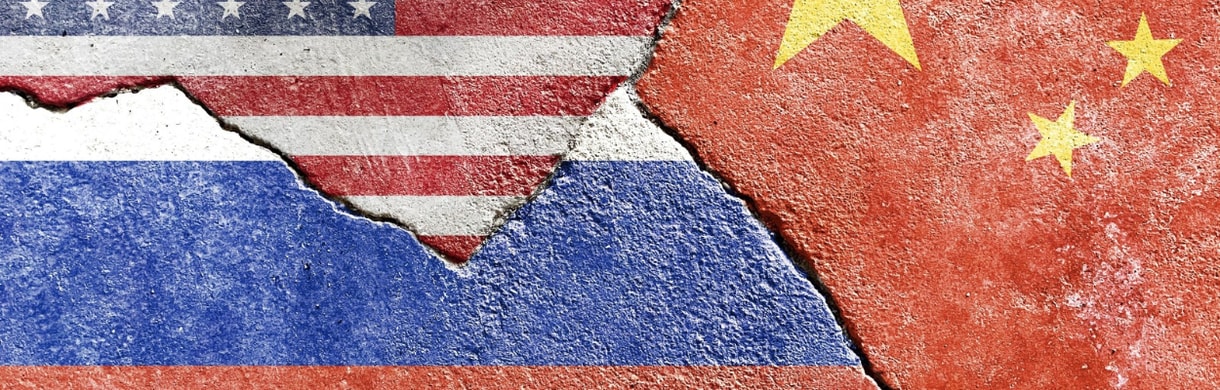


Donald Trump, Xi Jinping and Vladimir Putin meet today in Shenzhen on the sidelines of the APEC summit. It is the first three-way meeting between the leaders of the US, China and Russia. The official agenda covers Iran and nuclear arms control, and no concrete agreements are expected. For markets, the key issue is one unlikely to come up openly: the contest for technological supremacy.
For Moscow, the summit carries a different weight. The meeting gives the Kremlin a chance to present Russia as a superpower on a par with Washington and Beijing. Nuclear arms control is the main item on the table: the last US-Russia arms deal expired in February, ending the caps on the two largest stockpiles. The war in Ukraine, however, is not expected to be on the agenda, and Putin and Xi arrive with a close relationship – the two leaders have met more than 40 times since 2013.
A delicate moment
'This week, the United States has broadened the scope of chip export controls, shifting the focus from where computing components originate to who uses them, reflecting recent developments at Nvidia. The political moment is delicate,' says Paul Diggle, economist at Aberdeen Investments.
He does not expect the controls to be debated openly at the summit. 'But China could carry out selective retaliation afterwards, such as slowing the granting of licences for rare earths.' Beijing has linked its exports of critical minerals to the absence of new US restrictions, which puts the wider trade détente at risk.
Donatella Principe, Head of Global Strategy at Intermonte, agrees that geopolitics is setting the tone. 'More than macroeconomic data, this week it is events that are driving the markets, with geopolitics at the centre: the APEC meeting that frames the Trump, Xi Jinping and Putin trilateral.'
Towards technological decoupling
For Aberdeen, the new rules change what Washington is trying to control. 'The US is now treating access to cloud computing, rather than the chips themselves, as a strategic asset to be controlled. This could mean a more fragmented development of AI and carries the risk of a spiral of retaliation – a milestone towards our technological decoupling scenario,' says Diggle.
Much of the computing power Chinese firms use to train AI models runs on Nvidia chips, many of them bought through third countries. 'This could therefore mean an even greater US advantage in this cutting-edge field, while China would be forced to use domestic chips that offer lower performance and scale.'
Strong numbers, fragile sentiment
Nvidia's results show the restrictions are not stopping the AI trade on their own. Revenue reached $115.8bn, beating consensus by more than $6bn, and Q4 guidance of $130bn excludes China data-centre revenue. Diggle adds a caveat: 'The sustainability of the AI sector remains a hot topic in the markets, especially given political opposition to the rollout of data centres in the US.'
Sentiment has already taken a hit. Since 6 October, Nvidia has lost around $2tn in market value, roughly the size of the whole Italian stock market. Even so, Principe argues that a tech sell-off does not have to drag down the whole market. Since 22 June, chip stocks have fallen more than 31%, but the S&P 500 and the S&P 500 Equal Weighted remain positive. 'More than half of the stocks in the Russell 3000 have risen: market breadth is widening. So not only can investors continue to invest in equities, they can do so with greater diversification.'
The pressure is concentrated in the largest names. 'For the Magnificent Seven, not only are they punished two and a half times more than average when they disappoint, they are penalised even when they beat estimates. In investors' eyes, capex and burned free cash flow increasingly matter,' Principe says. Because data-centre capex is debt-financed, 'every doubt about its sustainability translates into wider spreads and higher CDS.'
Higher for longer
AI is also complicating the Federal Reserve's path. Markets now price in three hikes by the end of 2027, and the dollar has reached levels not seen since Liberation Day. 'The fact that this expectation has actually grown at a time of AI weakness shows that not even a slowdown in technology could derail a higher-for-longer path,' says Principe.
Sources: Aberdeen Investments, Intermonte