What do professional investors demand from alternative funds today

25 FEB, 2026



The alternative investment funds are increasingly playing a significant role in the portfolios of professional investors, especially due to their diversification capacity and their potential for long-term return generation. However, the current market environment —characterized by lower liquidity, higher execution demands, and a more detailed risk analysis— has increased the level of scrutiny on these types of vehicles.
In this scenario, transparency, the consistency of the management team, the management of illiquidity, and the real capacity for excess return are at the center of the analysis. Victoria Coca (Welcome AM), Carlos Bernal (Diaphanum) and Alberto Jiménez (A&G) share below what are, from their experience, the criteria that weigh more today when selecting alternative funds: more transparency and communication, greater visibility in cash flows, consistency throughout the cycles and, above all, effective returns that justify the committed capital.
Victoria Coca, senior investment manager at Welcome AM

At Welcome AM we demand from alternative assets that they generate an excess return compared to liquid assets to compensate for the illiquidity premium assumed by the investor. Although these assets contribute to decoupling your global portfolio, it should not be overlooked that this advantage is only attractive if it is accompanied by a sufficient return premium to compensate for its illiquid character and its nature as a long-term closed vehicle. Sometimes, we find products closed for 8 and 10 years that already at their launch offer an IRR that barely beats the return of a balanced liquid portfolio.
This factor has gained weight in the current demands of investors, especially after the delays in capital returns observed in venture capital in recent years. These episodes have contributed to generating a certain deterioration in the perception of the asset, as the lack of distributions limits the ability of investors to recycle capital and reinvest in new vehicles, making it difficult for managers to launch future strategies.
In this context, we have a growing interest in strategies with greater visibility in cash flow generation and with an effective average life of the fund lower than initially contemplated, which contributes to improving the liquidity profile of the portfolio and reducing the uncertainty associated with the real terms of disinvestment and capital return.
But if we had to summarize it, in one word, what we demand from managers is consistency. The analysis of these types of vehicles largely rests on the evaluation of the manager's track record, a good track record proven over different economic cycles and a clear alignment of long-term interests.
Finally, focusing on types of assets, the negative surprises observed since last summer make us more selective in certain strategies, particularly in private credit and venture funds with a strong bias towards artificial intelligence, where we see a risk of thematic concentration and overexposure to a limited number of startups or investment narratives, which makes us more demanding in their analysis.
Carlos Bernal, from the Illiquid Investments department of Diaphanum
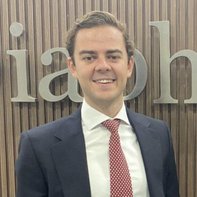
The context of alternative funds has changed significantly in recent years and, with it, also the criteria and capacity of the investor. After a period of abundant liquidity, today the focus is much more on investment discipline and procedures, and on the real flow of capital.
The first thing we observe is that the market needs to regain a logical order. If transactions are reactivated, this should translate sooner into higher distributions than new capital calls. We don't just look at the volume, but the speed. We analyze how quickly capital has historically been returned, but also with what criteria the committed capital has been called. The balance between investment and disinvestment is key. Without real returns to the investor, the system becomes tense and the fundraising of new funds ceases to be sustainable.
The track record and the management team continue to be deeply analyzed. Nobody invests without reviewing the experience and the coherence of the strategy. But what was once a clearly differential point is now largely a starting condition. It is taken for granted that the manager has credentials. What really makes the difference is how it executes now, in a different environment, and how much of the historical returns comes from real operational transformation versus multiple expansion in a very favorable context.
There is also more sensitivity to changes in the shareholding of the management companies. The entry of financial investors without a clear strategic logic can generate reasonable doubts about stability and long-term alignment.
Commissions matter, of course. But more than the isolated number, what is relevant is whether they are justified by the strategy and by the effective creation of value.
Structural aspects are increasingly important: the vehicle, the tax implications of them (beyond the 5%) and, above all, the internal decision-making process. That's where you really see how a team invests.
In short, less narrative and more consistency. More execution and less financial engineering.
Alberto Jiménez, fund selector at A&G

Beyond the quantitative part and profitability expectations, to understand what professional investors demand from alternative funds today, we must focus on two key qualitative aspects: open communication between managers and investors, and transparency. Both are fundamental for the investor to be able to place their trust in the alternative fund they incorporate into their portfolio.
This type of investment has different characteristics compared to traditional assets. One of the main ones is the illiquidity they present, as the investor cannot have immediate access to the capital. It is precisely because of this characteristic that the investor demands as fluid communication as possible with the management team, which allows him to monitor the evolution of his investment. Given that the opportunity cost can be high over a considerable period of time, clarity and regularity in communication become essential elements.
The second pillar is transparency. Participants in alternative funds want to access, as far as possible, all relevant information about their investment. They seek to understand the strategy, the risks, and the real evolution of the vehicle in which they have entrusted their capital. However, due to the very nature of these assets, there is confidential, sensitive information or subject to regulatory limitations that prevent its disclosure. This reality forces to find a balance between the obligation to protect certain data and the need to provide sufficient visibility to the investor.
Those who incorporate these types of assets into their portfolios do so, to a large extent, with the aim of diversifying their investment. Alternative funds provide risk and return profiles with different correlation levels compared to traditional assets.
Precisely because of their characteristics (lower liquidity, broader time horizons, and greater complexity) these investments require a patient investor profile and aware of their implications. In this context, the relationship between manager and investor takes on special relevance, based on trust, transparency, and constant communication.