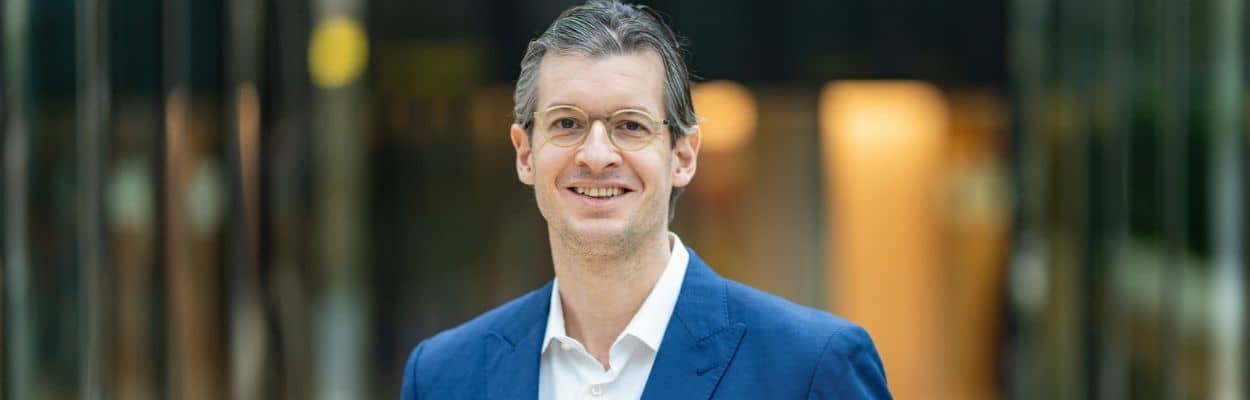
Women in the asset management industry: Anne-Sophie Tourrette

16 MAR, 2026
By Joanna Piwko from RankiaPro Europe


Anne-Sophie Tourrette is the founder of AdvisorOne Academy and a wealth management expert with more than 35 years of experience in International and Swissprivate banking and the last 17 years as a Independent Asset Manager (Ceo of AWAP ASSET MANAGEMENT SA). She is positioned as an inspiring and deeply human figure, with a strong mission: to make finance more accessible and help people take back control of their financial lives. She works closely with you in a mother-daughter dynamic, particularly around the AdvisorOne Academy / WomenInvest programs.
How does diversity (gender, cultural, or generational) influence an investment committee?
Diversity makes an investment committee stronger — not because it’s “nice to have,” but because it improves the quality of decision-making. Investing is never purely rational; it’s deeply influenced by psychology, experience, and blind spots. At WomenInvest, we often say that our biggest risk is not the market — it’s our own biases and group dynamics.
When you bring together different genders, cultures, and generations, you naturally get:
- More challenge to consensus (less “groupthink”)
- Richer risk perception (not everyone defines risk the same way)
- More questions asked — and in investing, good questions are often more valuable than quick answers
- Better alignment with clients, because client realities are diverse too
In practice, diversity improves both governance and performance discipline, because it creates healthier debate and better balance between conviction and caution.
What changes would you like to see in the financial sector to achieve greater gender equality?
I’d love to see three shifts — very concrete ones:
- A pipeline that doesn’t leak at every step
Women enter finance, but too many leave mid-career due to lack of flexibility, sponsorship, or fair progression. We need promotion processes that are transparent, measurable, and bias-aware. - A real evolution of leadership culture
Not every high performer leads in the same way. The sector still tends to reward one dominant style (often coded as “confident, assertive, always available”). But sustainable leadership also includes listening, long-term thinking, and emotional intelligence — especially important in a profession built on decision-making under uncertainty. - Financial education as a strategic priority
Gender equality in finance isn’t only about who sits on committees — it’s also about who feels legitimate to invest, to negotiate, and to take space. At WomenInvest, we see how transformational it is when women stop delegating their financial power and start building clarity and confidence step by step.
Do you have a female role model in the world of finance?
I’m inspired by women who combine technical excellence with independence of mind — women who don’t just “succeed in finance,” but reshape what success looks like.
Christine Lagarde is a strong role model in finance for me because she combines institutional leadership, strategic clarity, and a long-term vision at the highest level of global economic decision-making.
As President of the European Central Bank, she has shown that leadership in finance is not only about technical expertise, but also about communication, credibility, and the ability to guide markets and institutions through uncertainty. She also represents progress in visibility: she has helped normalize the presence of women in roles that historically remained overwhelmingly male—without compromising on standards or ambition.
More broadly, my role models are also the women I meet through WomenInvest: those who return to the subject of money after a life transition — divorce, career break, inheritance — and decide to rebuild with courage. That decision is powerful, and it deserves as much respect as any market call.
If you could leave a message for the next generation of female professionals, what would it be?
Don’t wait until you feel “ready” to take your place. Trust yourself!
Learn the technical skills — yes. But also understand this: finance is not only numbers, it’s behavior, emotions, and confidence under pressure. And you are allowed to ask questions, to slow down, to challenge assumptions, and to build your own style.
Also: don’t outsource your financial power — not to a partner, not to a colleague, not to “later.” Your independence is built through small repeated actions: clarity, structure, discipline, and the courage to start. At WomenInvest, we call it “choosing abundance”: taking ownership of your money story and building the future you want — step by step.