Fed holds rates steady amid rising inflation risks and internal dissent. How do experts interpret it?

30 APR, 2026
By Joanna Piwko from RankiaPro Europe
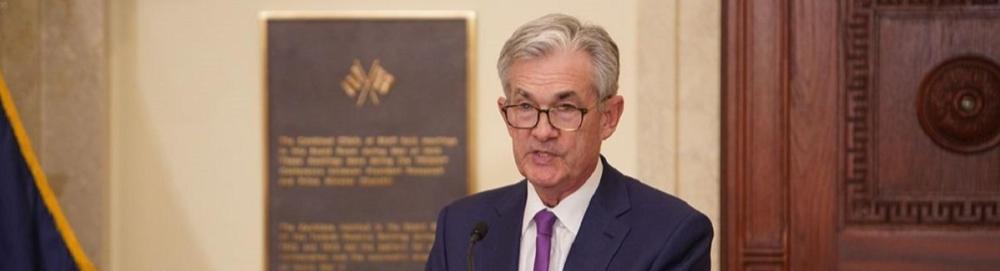


The Federal Reserve kept interest rates unchanged in the 3.5%–3.75% range, signaling a cautious approach as policymakers navigate a complex environment shaped by persistent inflation, geopolitical risks, and shifting market expectations.
Jon Butcher, Senior U.S. Economist at Aberdeen, noted that the central bank sees policy as “well positioned” to respond to evolving conditions, even as divisions emerge within the Federal Open Market Committee (FOMC). “There was a single dissenting vote… as Stephen Miran favored a 25 basis point cut,” he said, adding that other members opposed the easing bias in the Fed’s statement.
Susan Hill of Federated Hermes highlighted the unusual nature of the meeting, describing it as marked by “an unusual degree of dissent.” She pointed to growing concern within the Fed over inflationary pressures linked to geopolitical tensions, particularly the ongoing conflict involving Iran.
This backdrop is reinforced by recent inflation data. Richard Flax, Chief Investment Officer at Moneyfarm, emphasized that the Fed is operating “in a complex environment, caught between still partial signs of disinflation and the re-emergence of geopolitical risks.” He noted that headline inflation rose from 2.4% in February to 3.3% in March, partly reflecting higher energy prices בעקבות the escalation of the Iran conflict, which helps explain the Fed’s cautious stance.
Flax also pointed out that while the Fed continues to prioritize PCE inflation, CPI data have shown renewed persistence just as markets had begun to anticipate policy easing. A series of market-moving events—including Middle East tensions, the energy shock, and rapid repricing of rate expectations—has reinforced the view among central banks that inflation risks remain the key constraint on policy decisions.
From a market perspective, expectations have shifted significantly. Ray Sharma-Ong of Aberdeen Investments observed that “expectations have shifted… to a 50% probability of a rate hike in 2027,” reflecting concerns that the Fed may be moving toward a more neutral stance in response to inflation risks.
At the same time, the Fed appears inclined to remain patient. Sharma-Ong suggested policymakers are likely to avoid “reactive tightening,” instead waiting for clearer signals, particularly if energy-related inflation pressures begin to ease.
The policy outlook is further complicated by leadership uncertainty. Jerome Powell has indicated he will remain at the Fed as a governor until a Department of Justice investigation concludes, while Kevin Warsh’s nomination as the next Chair moves closer to confirmation—raising the prospect of future changes to the Fed’s policy framework.
For investors, the key takeaway is that the path toward lower rates may be slower and less predictable than previously expected. As Flax noted, a “higher for longer” rate environment is likely to continue shaping financial conditions, affecting both equity and bond valuations. In this context, he advocates a balanced and diversified investment approach, rather than attempting to time the first rate cut.
Despite the uncertainty, markets remain supported by relatively cautious positioning and a macro backdrop that, while still inflationary, is less extreme than in previous tightening cycles. However, with dissent rising inside the Fed and risks still skewed by geopolitics, the trajectory of monetary policy remains increasingly complex—and far from predictable.