The Fed keeps rates at 3.5%: the market is already looking at September

30 JUL, 2026
By Joanna Piwko from RankiaPro Europe
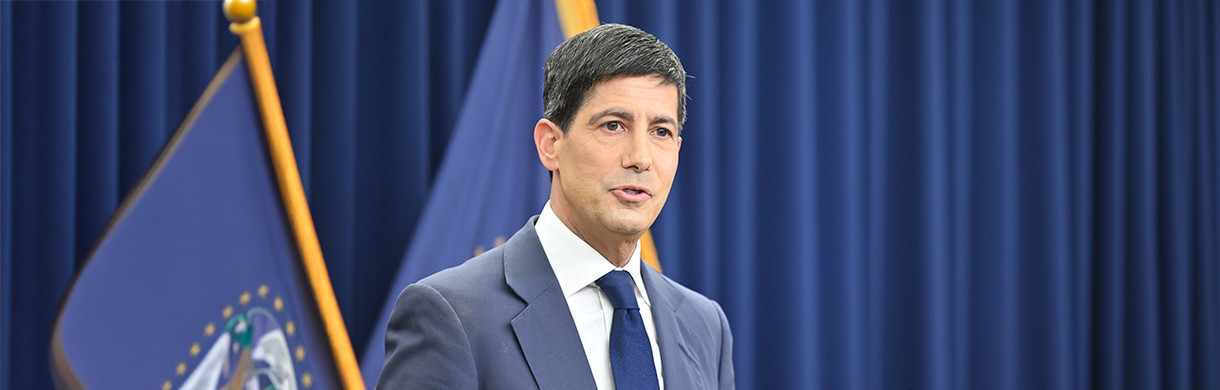


The Fed has decided to keep interest rates unchanged, in the range of 3.50%-3.75%, at its July meeting, which has been marked by the internal division of the committee. Three regional presidents voted in favor of raising rates, showing that the dilemma between containing inflation and supporting growth remains open within the FOMC.
The decision comes in a context of inflation still above the 2% target, with recent data somewhat more moderate but insufficient to dispel doubts. The market, far from being satisfied, has reacted cautiously to the tone of the press conference of President Kevin Warsh, whose communication strategy is beginning to generate as many questions as answers among fixed income managers.
Why does the Fed keep rates despite high inflation?
Jon Butcher, senior US economist at Aberdeen Investments, argues that the institution will continue to lean towards keeping rates "due to underlying inflationary trends", although he acknowledges that Warsh offered little guidance on the future, citing risks linked to energy, artificial intelligence and tariffs. In a similar stance, Paolo Zanghieri, senior economist at Generali Investments, emphasizes that Warsh insisted that keeping rates does not equate to laxity in the face of inflation, but to a different form of monetary tightening. However, the market "did not seem entirely convinced", according to Zanghieri, which anticipates a growing gap between official discourse and investors' reading.
Eric Winograd, chief US economist for AllianceBernstein, adds critical nuances: he considers that the press conference had an accommodating tone regarding the short-term rate trajectory, as Warsh only admitted that higher rates "could" be part of the solution, placing them behind other tools such as anchoring inflation expectations.
What role does the end of forward guidance play in Warsh's strategy?
The most relevant shift, according to the four experts, is Warsh's deliberate renunciation of offering explicit future guidance. Winograd interprets that the president "hopes to return inflation to the target through a firm speech, rather than through monetary policy actions", a bet that so far has worked because yields have risen and financial conditions have tightened without the Fed moving a single rate. Zanghieri agrees with the diagnosis: the Fed withdraws detailed guidance because, in its logic, an excess of forward guidance reduces the informative value of market prices and limits what the central bank can learn from them.
However, Winograd warns of a structural risk in this strategy: the possibility that Warsh is incurring a confirmation bias, since he only interprets the market movement as validation when it moves in the desired direction. For Zanghieri, Warsh himself failed to convincingly explain why the Fed does not act despite persistent inflation, which fuels doubts about the real firmness of the institution's anti-inflationary commitment.
How has the market reacted to the Fed's decision?
The market's response confirms these doubts. As Zanghieri reports, the yield on the two-year Treasury bond fell about 5 basis points after the meeting, while futures on federal funds began to discount increases of 18 basis points for September, compared to the nearly 25 basis points anticipated before the statement.
Conversely, the 30-year yield rose 12 basis points to 5.2%, its highest level since mid-2007, reflecting that the market continues to demand a premium for long-term inflation risk despite the softer tone perceived at the press conference.
Will the Fed raise rates in September?
Kay Haigh, global director and CIO of Fixed Income and Liquidity Solutions at Goldman Sachs AM, believes that a rise in September is "a very close decision" and that any further movement will depend on the evolution of hostilities in the Middle East along with the next two CPI data. Butcher (Aberdeen) agrees in qualifying September as a tight decision, placing as a decisive factor the evolution of energy prices in the coming weeks. Both warn, moreover, that if the Fed finally raises rates, it is unlikely to be an isolated movement: Butcher anticipates that it would be part of a series of two or three raises in quick succession.
Zanghieri, for his part, had initially predicted a rise at the December meeting, but clarifies that the hawkish turn within the FOMC, coupled with the need to convince skeptical markets, now increases the chances that the movement will be brought forward to September.
Conclusion
The consensus among the four managers points to a Fed trapped between two fronts: an underlying inflation that, according to Butcher, may not be so worrying in the end, and a communicative strategy of Warsh that, in Winograd's words, runs the risk of "winning the press wheel battle" at the expense of compromising long-term credibility. The key for September will not only be in inflation and employment data, but in whether the market is still willing to do part of the monetary adjustment work that the Fed, for now, prefers not to do by itself.
Disclaimer: This article is for informational purposes only and does not constitute investment advice. Past performance does not guarantee future results. Fixed income is subject to interest rate, credit and inflation risks, among others. The opinions cited belong to Kay Haigh (Goldman Sachs AM), Eric Winograd (AllianceBernstein), Jon Butcher (Aberdeen Investments) and Paolo Zanghieri (Generali Investments), and do not necessarily reflect the editorial position of RankiaPro.