Consequences of the conflict in the Middle East according to experts: oil, inflation, and markets under pressure

2 MAR, 2026
By Joanna Piwko from RankiaPro Europe
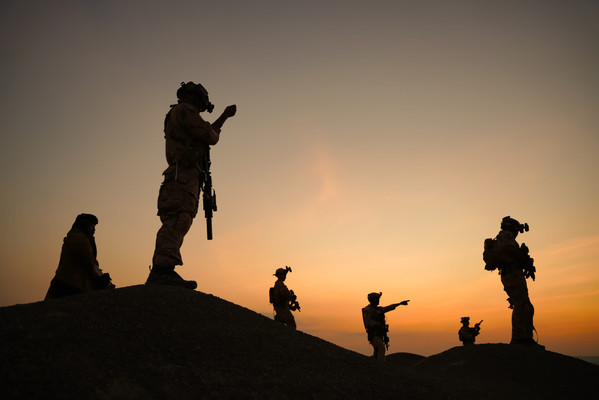


The military escalation between the United States, Israel, and Iran has reignited tensions in one of the most sensitive areas for global energy and financial balances. The markets have reacted with a rise in oil prices, movements on safe-haven currencies, and an increase in volatility.
However, according to international analysts, the structural impact on the global economy will depend mainly on the evolution and duration of the conflict.
The geopolitical conflict as a detonator
Lee Hardman, Senior Currency Analyst at MUFG Bank, points out that “the US dollar has strengthened sharply at the beginning of this week, triggered by the military conflict in the Middle East over the weekend.” Hardman also emphasizes that “there is a greater risk that the military conflict in the Middle East proves to be more destabilizing and lasting, with a more significant market impact.”
On the political front, the scope of the action appears equally significant. Paolo Zanghieri, senior economist at Generali AM (part of Generali Investments), indeed highlights the political scope of the military action stating that “the coordinated attacks of Israel and the United States against Iran have the explicit objective of a regime change”, adding that it is likely that “they will last much longer compared to the limited action observed in 2025.”
In this context, a possible qualitative leap in the conflict is outlined. Adam Hetts, Global Head of Multi-Asset at Janus Henderson Investors, talks about a potential leap observes that the attacks “have led to a potential escalation of the conflict, which could go beyond the recent short-term clashes.”
Confirming the systemic relevance of the area, Jeffrey Cleveland, Chief Economist at Payden & Rygel, recalls that “the US and Israeli air attacks against Iran have reignited tensions in an area of the world that has always been crucial for global energy and financial balances.”
Oil as the main transmission channel
The first concrete reflex was seen on the energy market. As Lee Hardman (MUFG Bank) points out, the immediate reaction of the energy market: "The price of Brent initially jumped to a high of 82.37 dollars overnight." He also reminds us that "the Strait of Hormuz represents a crucial chokepoint for the global economy, as about a fifth of the world's oil and liquefied natural gas passes through it daily."
It is precisely on this point that Paolo Zanghieri (Generali AM) insists, warning that "the closure of the Strait of Hormuz could reduce global oil production by between 15% and 20%" and specifies that "preventing oil prices from exceeding 100 dollars per barrel depends on the reopening of Hormuz."
In the same way, Adam Hetts (Janus Henderson Investors) reiterates the centrality of the strait noting that "about 20% of the world's oil supply passes through it." On price levels he adds that "Current oil prices discount a limited and relatively short-lived conflict."
In macroeconomic terms, therefore, as you clarify, Jeffrey Cleveland (Payden & Rygel) clearly identifies the macroeconomic channel: "The real macroeconomic transmission channel would be represented by energy, and in particular by any prolonged interruptions in the flow of oil through the Strait of Hormuz."
Impact on inflation and monetary policy
If tensions were to translate into a persistent increase in energy prices, the implications for monetary policy would be significant.
Lee Hardman (MUFG Bank) warns that "higher energy prices will likely reduce the Fed's margin for further rate cuts this year" and that the forecast of a weaker dollar becomes more difficult "if inflation in the United States were to remain higher for longer."
From a quantitative point of view, Andrzej Szczepaniak, senior economist at Nomura, quantifies the impact on inflation by noting that "a 10% change in oil prices causes a 0.4 percentage point impact on IPCA inflation" and that for gas "between 10% and 12% of the increase in natural gas prices is transferred to consumer gas prices." However, he emphasizes that "recent movements are so far sufficiently contained to ensure that the ECB does not adopt reactive measures in the short term."
In line with this caution, Adam Hetts (Janus Henderson Investors) observes that "increases in oil prices could generate global inflationary fear, which in turn could reduce the likelihood of interest rate cuts by the Federal Reserve."
However, the duration of the shock remains crucial. Jeffrey Cleveland (Payden & Rygel) clarifies that only a persistent shock would change the scenario: "Only a persistent surge in oil, such as to significantly affect consumption, production costs and corporate margins, would justify a deep revision of growth and inflation prospects."
Typical market reaction to geopolitical shocks
Looking at precedents, Jeffrey Cleveland (Payden & Rygel) recalls that "historically, in fact, geopolitical shocks tend to produce immediate but often short-lived reactions in the markets."
As an example, Lee Hardman (MUFG Bank) refers to the precedent of 2022 explaining that "the dollar index strengthened sharply by almost 20% between February 2022 and September 2022."
For the moment, however, Adam Hetts (Janus Henderson Investors) emphasizes that the current movements "are significant, but not yet particularly worrying in the broader picture of implications for investments."
Safe haven assets and behavior of different asset classes
At the same time, some safe haven currencies have shown a more robust dynamic. Lee Hardman (MUFG Bank) points out that "the Norwegian krone and the Swiss franc have outperformed along with the US dollar."
In the event of further increase in uncertainty, Adam Hetts (Janus Henderson Investors) observes that this "would probably make sovereign securities of global developed markets more attractive, including US Treasuries, and safe haven currencies."
On the asset class front, Jeffrey Cleveland (Payden & Rygel) emphasizes that "geopolitical tensions tend to hit equity markets more directly... while the bond sector - especially high-quality ones - often benefits from flows to safe haven assets."
The duration of the conflict as a critical variable
Ultimately, the decisive variable remains the duration of the conflict. Lee Hardman (MUFG Bank) warns that "there is a greater risk that the military conflict in the Middle East will prove more destabilizing and lasting." Paolo Zanghieri (Generali AM) adds that "a partial interruption through sporadic attacks on ships... could push prices up to 90 dollars or more."
However, Adam Hetts (Janus Henderson Investors) specifies that "such significant changes in market dynamics would require a prolongation of the conflict."
Caution in the face of excessive reactions
In light of these elements, the key word remains caution. Adam Hetts (Janus Henderson Investors) indeed recommends to "adopt a long-term view of investments rather than reacting to short-term volatility." Similarly, Jeffrey Cleveland (Payden & Rygel) calls for caution, reminding that "history teaches that not every political escalation automatically translates into a permanent macroeconomic shock."
Much will ultimately depend on inflation data and Fed decisions. As observed by Lee Hardman (MUFG Bank), certain monetary policy choices "will be harder to justify if inflation in the United States should remain higher for longer."