ECB June meeting preview: a cautious hike in a fragile landscape

10 JUN, 2026
By Joanna Piwko from RankiaPro Europe
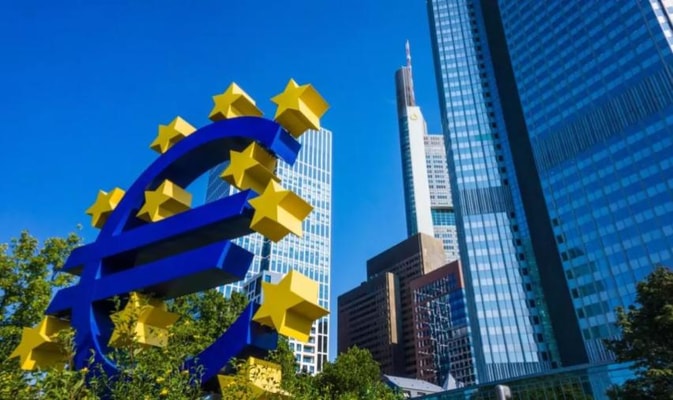


Analysis from leading European asset managers ahead of this week's ECB rate decision
The European Central Bank is widely expected to raise its deposit facility rate by 25 basis points this week, bringing it to 2.25%. Yet beneath the near-unanimous consensus on the move itself lies a far more nuanced — and divided — debate: is this the beginning of a sustained tightening cycle, or a one-off precautionary adjustment in the face of a deteriorating economic outlook?
A rate hike almost certain — but for how long?
Economists and strategists across the board agree that a 25bp hike is essentially a done deal. As François Rimeu, senior strategist at Crédit Mutuel Asset Management, puts it, this move 'should not be interpreted as the beginning of a new monetary tightening cycle, but rather as a prudent adjustment aimed at safeguarding the ECB's credibility, without anticipating further rate hikes.'
Konstantin Veit, Portfolio Manager at PIMCO, echoes this view: 'We do not expect the ECB to tighten rates aggressively at this stage, and we consider it less likely that there will be more than two hikes.' Two hikes, he notes, 'would bring the policy rate to the upper limit of the range of its own estimates of the neutral rate (1.75%–2.5%) and would serve primarily to manage expectations and prevent second-round effects.'
Felix Feather, Economist at Aberdeen Investments, adds an important nuance on how the move itself may be framed: 'The clearest dovish signal the ECB could send would be to frame the measure as a "risk management" hike, as that would imply that the ECB is positioning itself at a level from which it can defend against tail risks more effectively, rather than signalling the start of a prolonged hiking cycle.'
Growth slowing, confidence cracking
The backdrop against which the ECB is acting has deteriorated meaningfully. Irene Lauro, Senior Economist for Europe at Schroders, paints a sobering picture: 'The growth momentum in the eurozone is weakening in the face of problems in the energy sector, with PMIs pointing to contraction and services losing resilience.' Schroders has revised its eurozone GDP growth forecast down to just 0.7% for this year, before a modest recovery to 1.4% in 2027.
Consumer confidence is a particular concern. Lauro notes that 'the abrupt deterioration in consumer confidence suggests that consumers will likely become more cautious,' with preventive saving expected to rise and domestic spending to slow. Manufacturing faces additional headwinds from 'increased uncertainty, high energy costs and new supply chain disruptions,' while the tourism sector is 'facing difficulties as jet fuel shortages are likely to weigh on travel volumes and revenues over the coming summer months.'
Veit at PIMCO confirms the shift in momentum: 'While the euro area economy showed some modest momentum before the war in the Middle East, we have since seen a material deterioration in the outlook, mainly due to increased uncertainty and higher energy prices weighing on consumption and investment.'
Inflation pressures — real, but concentrated
Headline inflation has climbed above the ECB's 2% target, driven largely by energy. Michaela Huber, Senior Diversified Assets Strategist at Vontobel, notes that 'headline consumer price inflation rose to 3.2% year-on-year in May, up from 3.0% in April,' with energy prices surging more than 10% year-on-year. Crucially, however, 'core inflation has also risen, suggesting that underlying price pressures are beginning to build.'
That said, Huber and others argue these pressures remain contained enough to limit the ECB's response. She identifies three key factors: weak economic momentum, corporate reluctance to pass on higher costs to consumers, and a labour market that is 'starting to lose strength, with wage pressures remaining moderate.' In her words, 'this reduces the risk of a wage-price spiral — the ECB's main concern — and second-round effects appear less pronounced than in 2022.'
Feather at Aberdeen concurs: 'So far, inflationary pressures remain concentrated in the energy sector, with little evidence of these second-round effects. Wage indicators and surveys continue to show few signs of an increase in wage demands, which should limit the pass-through to services inflation.'
What to watch from Lagarde
Beyond the rate decision itself, markets will be closely scrutinising President Christine Lagarde's tone and any signals about future policy direction. Feather anticipates that 'Lagarde will set out some key parameters for further monetary tightening,' centred less on the energy crisis itself and more on 'second-round effects — especially medium-term consumer inflation expectations and wage demands.'
Crucially, the ECB is unlikely to pre-commit to anything. As Feather notes, 'we know it is almost certain that the ECB will not offer guidance on further hikes. The clearest indication of further tightening we are likely to receive is that Lagarde confirms that the Governing Council maintains an implicit bias in favour of hikes.' Markets pricing in two additional hikes over the next twelve months beyond this week's move, he suggests, 'could interpret this as a surprisingly evasive attitude.'
Rimeu at Crédit Mutuel expects the ECB to 'avoid explicitly committing to a further rate hike in July and maintain a data-dependent, step-by-step approach.' The updated macroeconomic projections, he adds, are likely to show 'growth revised down from 0.9% to around 0.6% for 2026, headline inflation revised up from 2.6% to above 3%, before returning to the 2% target only in 2028.'
The bottom line: one and done?
The broad consensus among managers points to June's hike as potentially the last of this cycle — at least for now. Lauro at Schroders believes 'it is too aggressive for markets to price in two rate hikes from the ECB this year,' expecting rates to remain on hold through 2025 with 'more restrictive monetary policy only likely in 2027, once the recovery gains more momentum.' Aberdeen's Feather, working from a base case of oil prices falling back to $90 per barrel, concurs that 'the June hike could be the last of this year,' though he is quick to add that 'the risks are clearly tilted to the upside, as strong second-round effects or a new energy crisis would lead the ECB to respond much more aggressively.'
For now, the ECB walks a difficult line — acting enough to preserve credibility on inflation, while avoiding any move that could further damage a recovery that is already losing steam.