ECB set to hold rates this week as experts see a December hike on energy-driven inflation

27 OCT, 2026
By Joanna Piwko from RankiaPro Europe
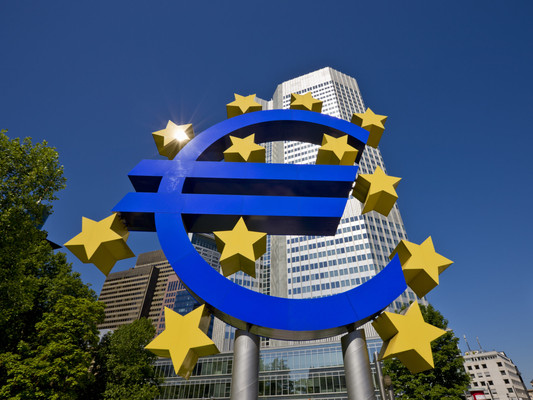


The European Central Bank is expected to leave its deposit facility rate unchanged at 2.5% when it meets this week, but the debate has already moved on to December.
Konstantin Veit, Portfolio Manager at PIMCO, and Martin Wolburg, Senior Economist at Generali AM (part of Generali Investments), both see the next hike arriving before year-end, as energy prices push euro area inflation back above target.
A pause in October, a hike in December
For PIMCO, this week's meeting should be a straightforward hold. Veit expects the Governing Council to keep rates where they were set in September, when the ECB raised them by 25 basis points, and to do so without dissent.
We believe that, at its October meeting, the European Central Bank will keep the deposit facility rate unchanged at 2.5%, and we expect the decision to be unanimous.
Konstantin Veit, Portfolio Manager, PIMCO

The market is currently pricing in around 70 basis points of hikes. Veit believes the risks lean towards fewer increases than that, while acknowledging that uncertainty is exceptionally high. His base case is a hike in December that takes the ECB into slightly restrictive territory, a path he had already flagged ahead of the September decision.
Generali sees a slightly longer tightening run. Wolburg notes that President Lagarde struck a hawkish tone in September, warning that inflation would stay well above target for a prolonged period, with upside risks.
We expect two more hikes to 3%, which we anticipate in December and March, with the risk of earlier or more pronounced tightening.
Martin Wolburg, Senior Economist, Generali AM (part of Generali Investments)
Energy keeps inflation in focus
The trigger for further tightening is energy. Euro area HICP inflation jumped to 3.2% in August from 2.9%, with energy adding 0.37 percentage points, while services eased to 3.0% and core inflation stood at 2.4%. According to Wolburg, gas prices were up roughly 130% year on year in September.
Pipeline pressures point the same way, with producer prices up 5.8%, import prices up 3.9% and commodities up 37% year on year. Wage growth remains moderate, but Generali warns that the longer the spike lasts, the greater the risk of second-round effects.
PIMCO stresses that the ECB is not targeting energy prices themselves. What matters for the Governing Council is whether higher energy costs become embedded in broader inflation, and on that front Veit sees no clear evidence yet.
In the face of energy shocks, the ECB's strategy is not to react to energy prices, but rather to the risk that the rise in those prices feeds through into inflation. Although we are currently seeing higher inflation, there are still no signs that it is becoming durably embedded. Indirect effects remain contained and second-round effects are not evident.
Konstantin Veit, Portfolio Manager, PIMCO
Growth, meanwhile, is holding up better than feared. Second-quarter GDP was revised up to 0.6% quarter on quarter (closer to 0.25% excluding Ireland), the manufacturing PMI reached a four-year high in August and September, and unemployment stands at 6.4%. Generali has raised its forecasts accordingly.
| Generali AM forecast | 2026 | 2027 |
|---|---|---|
| Euro area GDP growth | 1.0% (from 0.8%) | 1.2% (unchanged) |
| Euro area inflation | 2.9% (unchanged) | 2.4% (from 2.3%) |
Bond markets: wider spreads and steeper curves
Financial conditions have also tightened on their own. Since the last ECB meeting, Veit points out, long-term rates have risen and euro area sovereign spreads have widened notably, which should slow growth and dampen pass-through more than the ECB assumed in September. In his view, the ECB remains on the "middle path" Lagarde set out earlier this year.
Thomas Friedberger, Deputy CEO and Co-CIO of Tikehau Capital, sees a structural reason why higher long-term yields may persist. Companies are prioritising resilience over efficiency, he argues, investing heavily in defence, decarbonisation, digitalisation and deglobalisation.
Deglobalisation and the building of resilience involve costs and lower efficiency, and they are inflationary. Massive fiscal expansion is also inflationary, as is the adoption of more restrictive migration policies.
Thomas Friedberger, Deputy CEO and Co-CIO, Tikehau Capital
The result, according to Friedberger, is a steepening of yield curves. In a reflationary environment without precedent since the 1970s, sovereign bonds are not playing their traditional safe-haven role for now, while value creation in equities and private equity will rely more on earnings growth than on multiple expansion.