Electric vehicles and the energy transition: progress but also challenges ahead

23 SEPT, 2025
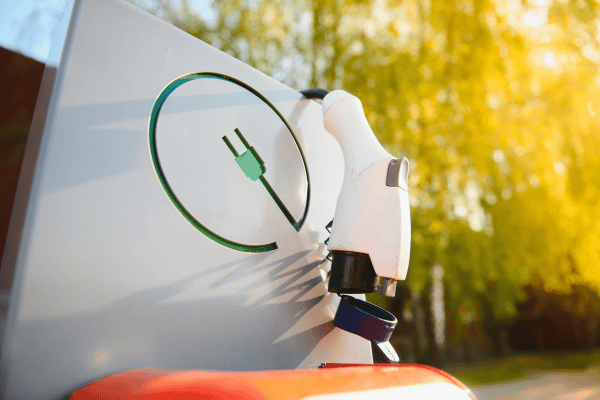


The rise of electric cars is undeniable, backed by some impressive statistics. Just this September, the world even marked World EV Day, a celebration that highlights how far the industry has come. But like any major transition, the shift to electric vehicles brings both opportunities and challenges, so we asked experts to share their perspectives.

Richard Marshall, Head of Research Infrastructure at DWS
Transport is one of the few sectors which is struggling to decarbonise. However, the rapid expansion of electric vehicles (EVs) and charging infrastructure is a defining feature of the global energy transition. In leading markets such as China and Europe, the proliferation of EVs is intertwined with how societies will produce, distribute, and consume clean energy. Yet, the energy transition remains a complex and uneven journey with significant challenges still to overcome.
Even as the broader automotive market faces economic headwinds and the industry continues to deal with the costs of making the transition to electric-only production, EVs themselves are bucking the trend and growing in popularity and market share. China’s market has gone from 5% to 50% of new car sales being electric in under five years. Europe, too, is advancing with ambitious targets, aiming for battery electric vehicles to comprise 80% of new car sales by 2030 and for new ICE vehicles to be phased out from 2035. In Europe this momentum is being driven by a wave of new, more affordable models from both established European manufacturers and ambitious Chinese entrants. Alongside this, the build-out of charging infrastructure is gathering pace, with both public and private investment driving the deployment of fast-charging networks. Advances in battery technology and economies of scale are making EVs more attractive, while the growing availability of charging points is reducing range anxiety and boosting consumer confidence.
We see a direct link between policy, industry, and consumer demand. These achievements are supported by robust policy frameworks, fiscal incentives, and a concerted push to expand charging infrastructure. China now hosts 65% of the world’s public charging points, while Europe’s Green Deal Industrial Plan and Net-Zero Industry Act are streamlining investment in key sectors, including EV charging infrastructure.
However, the success of the EV market should not be separated from the broader context of the energy transition. While investment in clean technologies now exceeds that in fossil fuels, the deployment of renewables and supporting infrastructure is not keeping pace with rising global energy demand. Since 2015, less than half of the increase in energy consumption has been met by renewables, with fossil fuels, particularly coal, maintaining a dominant role in many regions. As a result, the electricity powering EVs is not yet fully decarbonized, and the climate benefits of transport electrification depend on continued progress in greening the grid.
The supply chain for critical minerals adds another layer of complexity. The batteries and charging stations that underpin the EV revolution rely on secure supplies of lithium, cobalt, copper, and rare earths—resources whose production and refining are highly concentrated in a few countries, notably China. This concentration introduces geopolitical risks and potential bottlenecks, which could slow the pace of both battery manufacturing and grid expansion.
Policy divergence further complicates the landscape. While Europe and China are reinforcing their climate ambitions with fiscal stimulus and regulatory support, the United States has recently reversed several clean energy policies, including incentives for EVs and renewables. Such shifts create uncertainty for investors and innovators, and risk slowing the global momentum toward decarbonisation. The growth of EVs and charging infrastructure is a promising development in the energy transition, reflecting both technological progress and policy ambition. Yet, the full potential of electrification will only be realised if it is matched by accelerated deployment of renewables, resilient supply chains for critical minerals, and coherent, long-term policy support. The energy transition is not simply about replacing fossil fuels with clean energy, but rather constructing a larger, smarter, and more resilient system, with EVs and charging networks as essential components.

Giacomo Fumagalli, Portfolio Manager of the Smart Mobility Equities strategy at Robeco
Global electrification has now become a structural reality. In just five years, annual electric vehicle sales have risen from about 2.2 million (2019) to 17.5 million (2024), pushing EVs to over 20% of global car sales. China remains the main driver, surpassing a 50% monthly share in July and August, while Europe is regaining momentum thanks to stricter CO₂ emissions regulations for car fleets and a much wider range of available models. It is important to note that growth in “rest of the world” markets, where Chinese brands face fewer entry barriers, is already offsetting weakness in the United States. Considering electrification, autonomy, connectivity, and sharing, the total smart mobility revenue could approach USD 3 trillion by 2030.
The latest data highlights Europe’s rapid progress. In August 2025, battery electric vehicles (BEVs) accounted for 19–27% of new car registrations in major European markets (Germany, France, and the UK), with a growing share also for plug-in hybrid vehicles (PHEVs). This increase is driven by regulation, a richer model lineup, and greater affordability, particularly important in Southern European markets.
Certainly, some of the European automotive industry is pressuring the European Commission to reconsider or delay the ban on internal combustion engine (ICE) cars set for 2035, but as Håkan Samuelsson of Volvo stressed at the IAA in Munich 2025, “there’s no turning back on EVs”: the growth trajectory is already set, and the transition is well underway regardless of regulatory debates.
Although the United States has recently faced a setback in the EV sector, with the cancellation of federal purchase subsidies and an overall less supportive political environment, it is important to keep a broad perspective. The U.S. remains a relatively minor player in the global EV market, accounting for just 9% of new car sales in the first half of 2025—far behind China and Europe.
The decline in demand in the U.S. is more than offset by strong growth in ASEAN countries and accelerating adoption in Latin America and other emerging markets. Crucially, leading U.S. automakers are not abandoning electrification.
Despite the lack of favorable policies, the direction remains unchanged: the auto industry itself views electrification as a matter of survival. The journey may take longer in the U.S., but global momentum in favor of EVs remains intact.
Software-defined vehicles (SDVs), advanced driver assistance systems (ADAS), and autonomous vehicles (AVs) are becoming central, promising not only cleaner transportation but also safer roads and greater accessibility. One of the leaders in the robotaxi sector, for example, reports around 90% fewer insurance claims compared to human-driven cars. Autonomy also addresses inefficiency: private cars sit parked about 95% of the time. By enabling 24/7 operation without breaks or sick leave, autonomous vehicles can ease the shortage of drivers in mobility and logistics, reduce cost per kilometer, and give back time to travelers—especially those unable to drive due to age or disability.
In conclusion, investment opportunities in the mobility sector now range from battery production to LiDAR systems, all the way to the enablers of SDVs. Mobility is becoming electric and autonomous at a sustained pace, and we see significant investment opportunities across the entire mobility ecosystem.