Fed preview: Warsh takes the helm as stagflation risks cloud the rate path

11 JUN, 2026
By Joanna Piwko from RankiaPro Europe
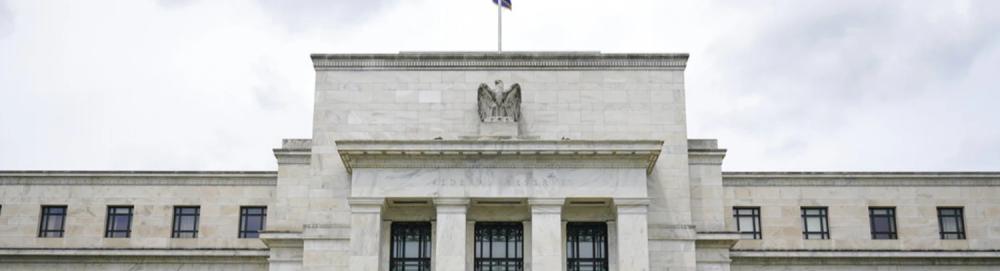


As Kevin Warsh prepares to chair his first Federal Open Market Committee meeting, asset managers and economists are converging on a cautious message: rates will stay on hold for longer than markets had hoped, inflation is proving stickier than anticipated, and the new Fed chair faces a more hawkish committee than his own instincts might prefer.
A Hawkish Committee Behind a Dovish Chair
Warsh's appointment has attracted attention partly because of his belief that AI will exert a disinflationary effect on the economy, enabling structurally lower interest rates. Yet he assumes the chairmanship at a moment when the committee around him is moving in the opposite direction.
Raphael Olszyna-Marzys, International Economist at J. Safra Sarasin, notes that governors Christopher Waller and Lisa Cook have joined three regional Fed presidents in arguing that 'the dovish forward guidance no longer has reason to feature in the statement.' He expects the new dot plot to show 'no further rate cuts this year, and some officials could even project a hike' — with 'the distribution of dots shifting upward' across the board. On Warsh himself, Olszyna-Marzys adds that 'he has long questioned the usefulness of forward guidance,' making it unlikely he will push back against the hawkish drift.
George Brown, Senior Economist at Schroders, frames the central dilemma starkly: 'The question now is whether the Fed can afford to hold rates without falling behind.' With US CPI rising to 4.2% in May, Brown warns that all eyes will be on Warsh's first press conference — and that 'if he comes across as more moderate, markets could start to question that commitment, pushing US Treasury yields higher.'
Inflation: Broad-Based and Persistent
The inflation picture has deteriorated more quickly than the Fed's own forecasts implied. Olszyna-Marzys notes that PCE inflation 'had already risen to 3.8% in April, making a substantial upward revision to the March forecast of 2.7% virtually unavoidable.' Supply chain indicators suggest 'supply chains are under increasing pressure and price pressures are intensifying,' with second-round effects from the energy shock now a live concern. His base case is that 'the new dot plot could imply keeping rates unchanged through 2028.'
Paolo Zanghieri, Senior Economist at Generali Investments, sees core PCE having risen to around 3.3% in April, with 'real-time estimates indicating it will remain at that level through the summer.' He acknowledges that 'energy costs and AI-linked demand continue to add pressure on prices,' but expects housing disinflation and labour market stability to prevent a broader acceleration — with PCE inflation closing the year near 3%, 'without entering a new phase of sustained rebound.'
Álvaro Peró, Head of Fixed Income Investment at Capital Group, warns that 'new supply chain pressures, including indirect effects from chemical and industrial inputs, could add moderate upward pressure to core PCE in the coming months.' A sustained hiking cycle, he argues, would require 'a more persistent inflationary impulse, possibly driven by a combination of strong demand, tighter labour markets, and significant wage growth' — a scenario he considers a tail risk, 'closer to 10% than the higher levels implied by options markets.'
Growth: Resilient but Fragile
Despite the pressures, growth has held up better than feared. Zanghieri expects GDP expansion of 2% for 2025, noting that consumption 'grew 2.2% year-on-year in the first four months' — a solid print. But he flags the quality of that resilience: 'consumption is increasingly dependent on the decapitalisation of savings,' with the savings rate falling to 2.6% in April, and 'higher gasoline prices will put pressure on real incomes in the coming months.' Job creation, he adds, 'remains concentrated in non-cyclical sectors, such as healthcare,' even as headline unemployment stays low.
Olszyna-Marzys points to the AI investment cycle as a notable bright spot — 'construction employment has risen by 420,000 since the end of last year, despite a decline in residential investment' — while consumer spending has been supported by equity wealth effects. He expects the Fed's unemployment forecasts to be revised slightly lower, 'towards 4.2 or even 4.3%,' reflecting a labour market where 'supply and demand are broadly in balance,' with the latest JOLTS data showing 'the job openings-to-unemployed ratio rising to 1.03 in May, the highest level since January 2025.'
The Rate Outlook: On Hold, With Risks Tilting Higher
The consensus across the three firms is that the Fed will remain on hold for an extended period, with the direction of the next move now genuinely uncertain. Zanghieri's base case is that 'the Fed will keep rates unchanged for an extended period, with the next move most likely being a cut rather than a hike — but not before the first quarter of 2027, with risks tilted towards the possibility of no change at all.'
Capital Group's Peró maintains a bias towards eventual easing, but acknowledges 'the path has become more conditional' — dependent on inflation proving transitory and the labour market softening. He nonetheless argues that 'maintaining some duration exposure remains appropriate,' given that market-implied hiking probabilities 'appear exaggerated relative to underlying fundamentals.'
J. Safra Sarasin's Olszyna-Marzys goes further, expecting the Summary of Economic Projections to signal that 'the next rate move is more likely a hike than a cut' — a significant shift in tone. The more intriguing question, he suggests, is 'how much of a team player Warsh will prove to be, and to what extent his press conference remarks will reflect the committee's views rather than his own.'
Sources: J. Safra Sarasin, Capital Group, Generali Investments, Schroders
Disclaimer: This article is for informational purposes only and does not constitute financial, tax or legal advice, nor an offer to buy or sell financial instruments. The opinions reflect the evaluations of the respective management companies at the date of publication and are subject to change without notice. Past performance is not a guarantee of future results. Emerging market debt involves specific risks: currency volatility, geopolitical risk, liquidity risk, sovereign and corporate credit risk.