Forbes reveals the world’s 100 most powerful women, including key figures from finance

4 MAR, 2026
By Joanna Piwko from RankiaPro Europe
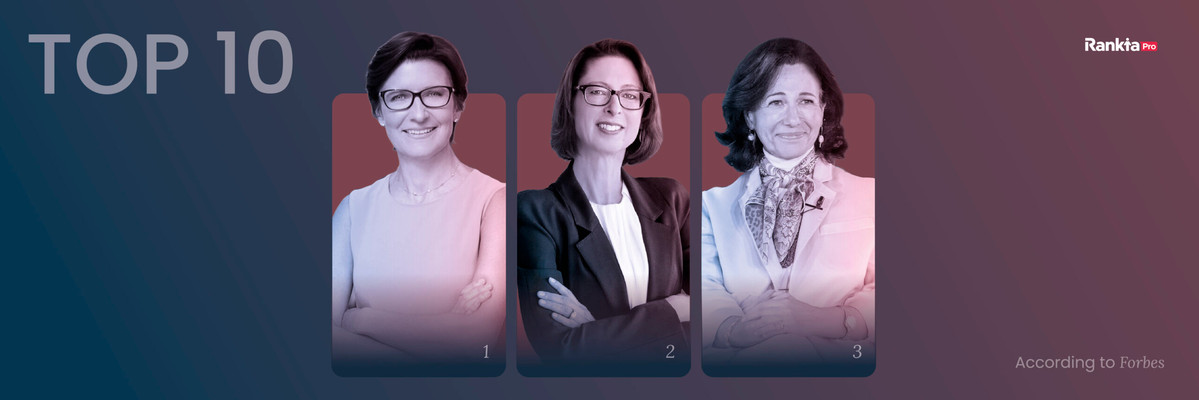


Despite the challenges women around the world faced in 2025 – from economic uncertainty to persistent gender inequalities – many female leaders continued to reshape global industries and wield extraordinary influence. The latest Forbes list of the World’s 100 Most Powerful Women highlights those who have turned leadership, innovation and financial influence into tangible global impact.
Across politics, technology, business and finance, these women command vast economic ecosystems. Some lead trillion-dollar economies, while others oversee corporations worth hundreds of billions of dollars or direct philanthropic initiatives that reshape education, technology and global development. Their influence extends far beyond boardrooms, affecting markets, industries and the lives of millions.
To determine the ranking, Forbes evaluated candidates using four key criteria: money, media presence, impact and spheres of influence.

The result is a group of 100 women who collectively control around $37 trillion in economic power and influence more than one billion people worldwide. Among them are executives driving the artificial intelligence revolution, philanthropists reshaping education and entrepreneurs building multibillion-dollar global brands.
In this article, we take a closer look at the 10 most powerful women in finance from the Forbes ranking, examining how they built their influence and the impact they are having on global markets and the financial industry.
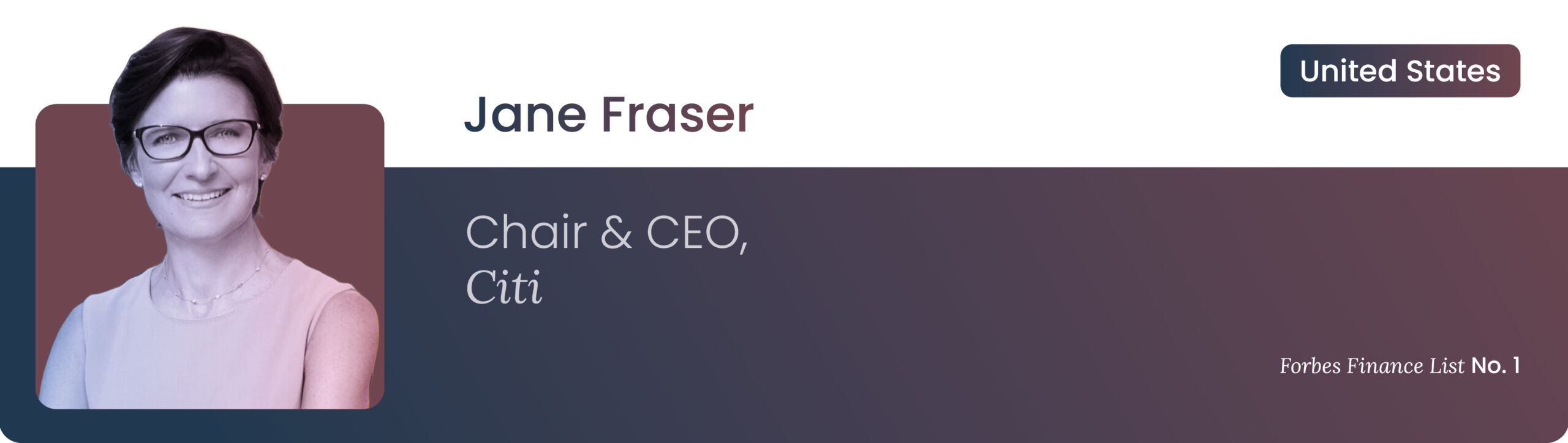
Jane Fraser has been the CEO of Citigroup since March 2021, becoming the first woman in history to lead a major Wall Street bank. A longtime Citi executive who joined the company in 2004, she previously served as the bank’s president and CEO of Global Consumer Banking. Over the years, Fraser has held several key leadership roles, including overseeing corporate strategy and mergers and acquisitions during the financial crisis. In October 2025, Citigroup’s board also appointed her as chair, a move aimed at ensuring leadership continuity at the banking giant.
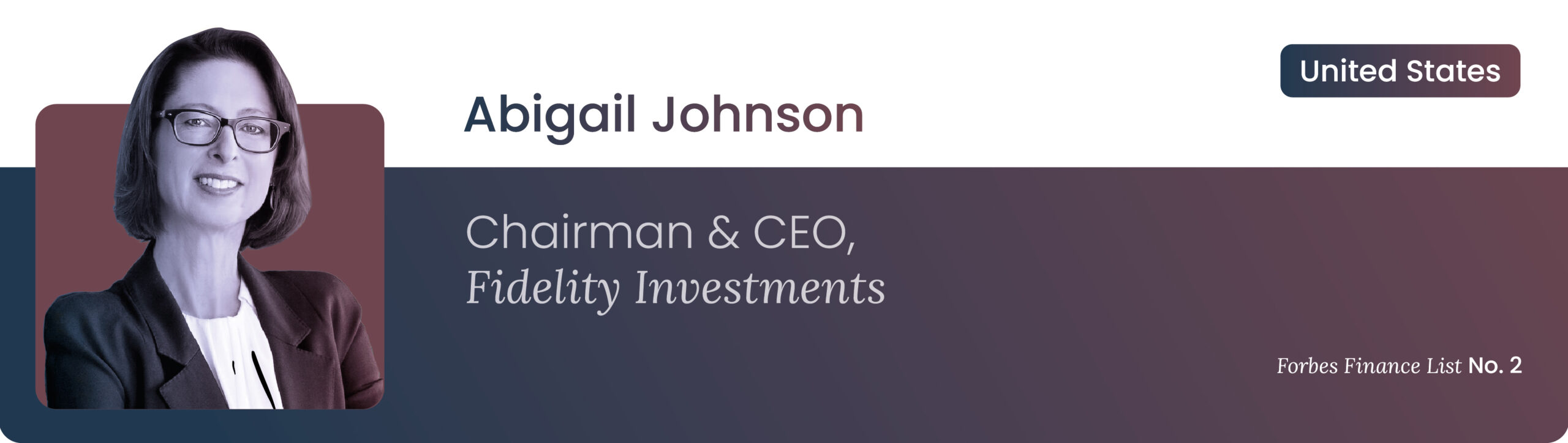
Abigail Johnson has been the CEO of Fidelity Investments since 2014 and has served as chairman since 2016, taking over leadership of the firm from her father. Founded by her grandfather in 1946, the Boston-based asset management giant now oversees about $5.9 trillion in discretionary assets as of March 2025. Johnson owns an estimated 29% stake in the company and has played a key role in expanding Fidelity’s digital asset strategy. Under her leadership, the firm launched a platform in 2018 allowing institutional investors to custody and trade cryptocurrencies such as bitcoin and ether. Johnson joined Fidelity as a full-time analyst in 1988 after earning an MBA from Harvard.
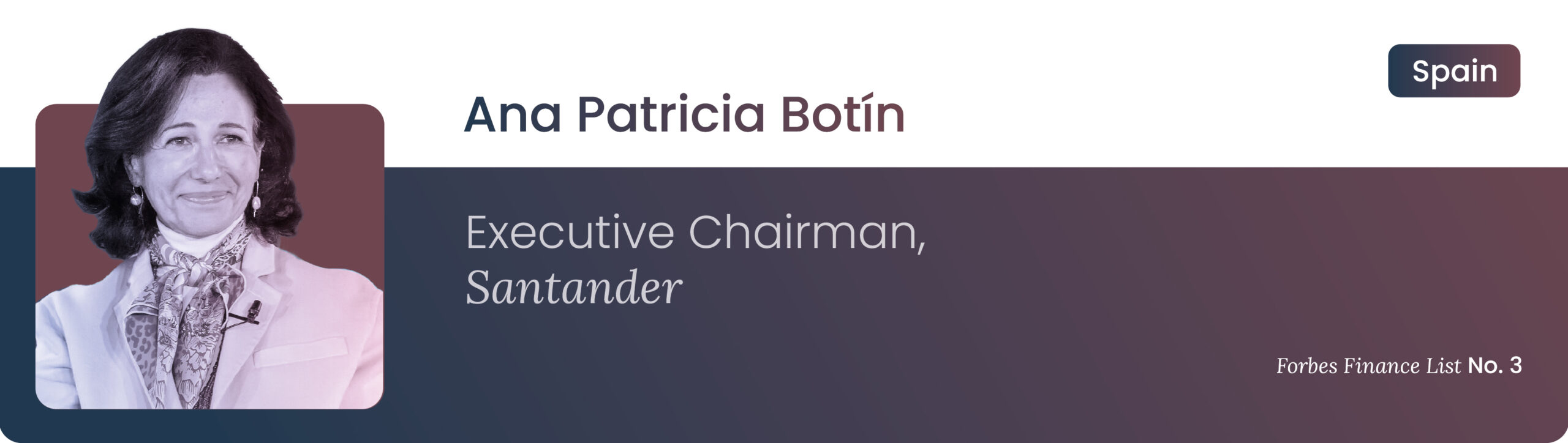
Ana Botín has served as executive chair of Banco Santander since 2014, succeeding her father, Emilio Botín. Under her leadership, the bank strengthened its global position, notably with the 2017 acquisition of Banco Popular for one euro, a deal that helped make Santander the largest bank in Spain. By 2025, the group’s customer base had grown to more than 175 million people worldwide. Botín has been a strong advocate for fintech innovation and entrepreneurship, supporting small businesses and women-led companies. She also launched the Santander X initiative to promote university entrepreneurship and has backed projects developing blockchain-based financial platforms.
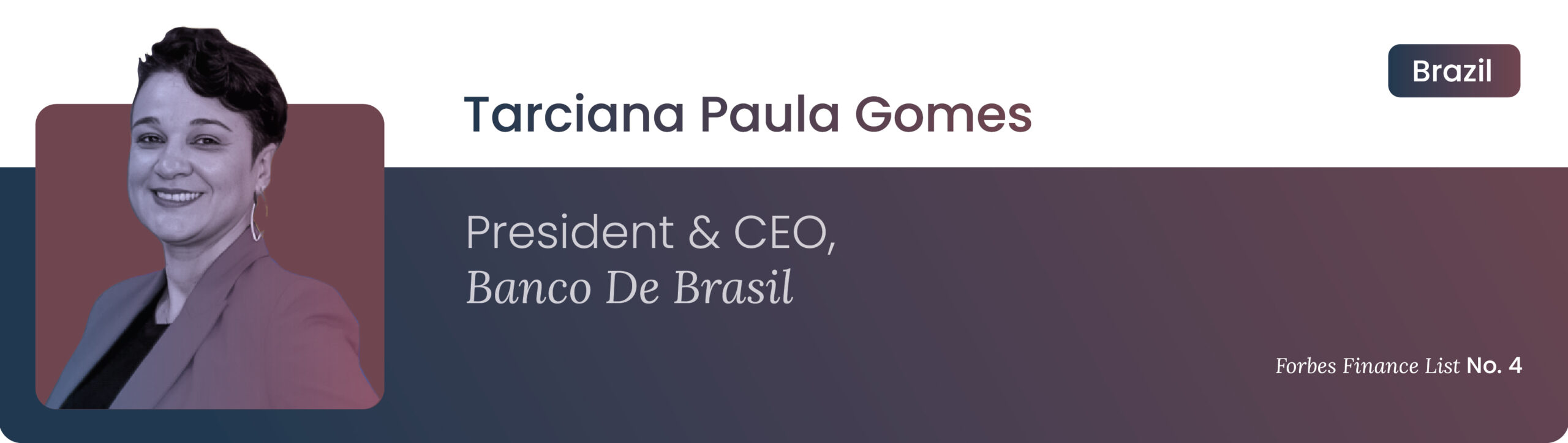
Tarciana Medeiros became CEO of Banco do Brasil in January 2023, making history as the first woman to lead the 215-year-old institution, Brazil’s oldest bank and the second-largest in Latin America. She joined the bank in 2000 and previously led its retail business division before stepping into the top role. Medeiros is known for her strong focus on sustainability and environmental finance. In 2023, she addressed the United Nations General Assembly on the need to increase funding for sustainable businesses and helped establish a $250 million partnership between Banco do Brasil and the Inter-American Development Bank to support renewable energy and sustainable infrastructure projects. Before starting her career in banking, Medeiros worked as a teacher.
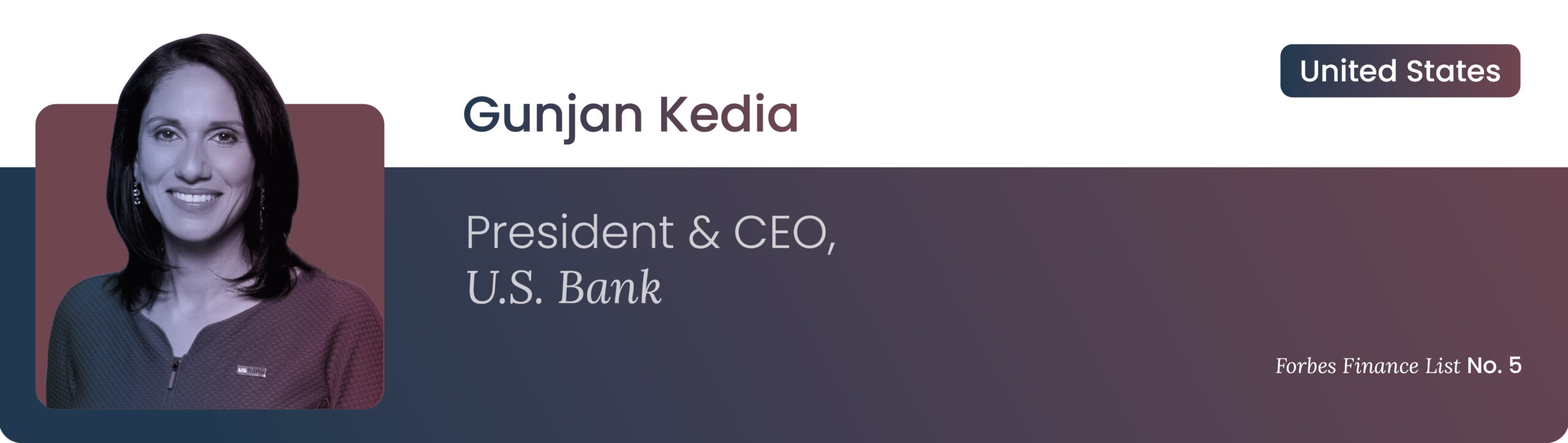
Gunjan Kedia became CEO of U.S. Bancorp in April 2025 after being appointed president of the company in May 2024. She leads one of the largest banking organizations in the United States, which employs nearly 70,000 people and manages more than $660 billion in assets. Kedia joined U.S. Bank in 2016 and previously served as vice chair, overseeing wealth, corporate, commercial and institutional banking. Before that, she held senior roles at PwC, McKinsey, BNY Mellon and State Street. Originally from India, Kedia studied engineering at the Delhi School of Engineering and began her career in sales, selling air fresheners door-to-door in Delhi in the mid-1980s.
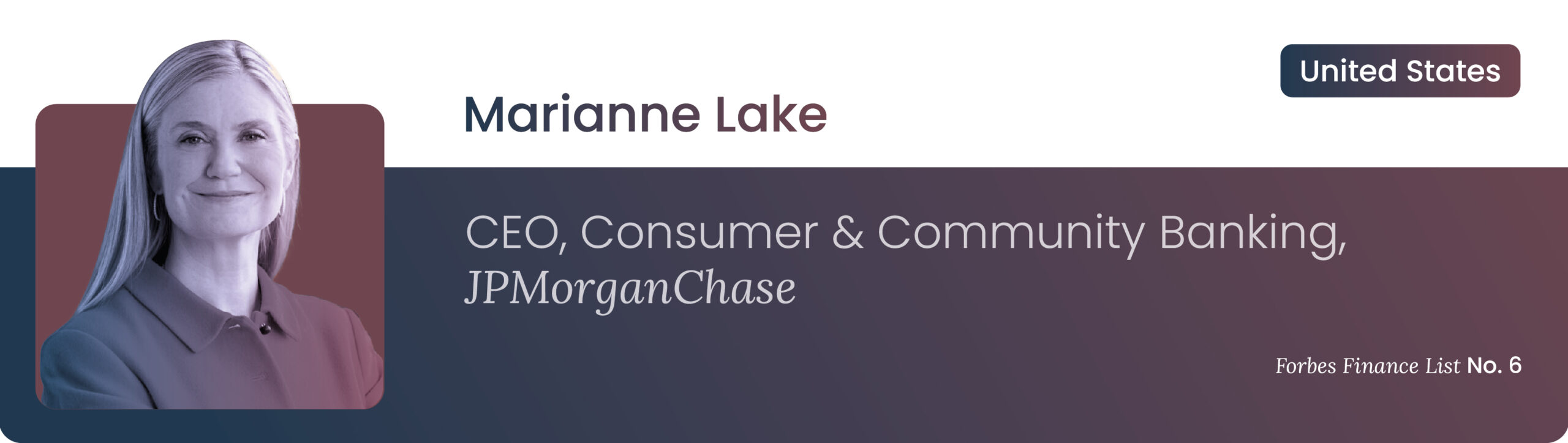
Marianne Lake is the CEO of Consumer & Community Banking at JPMorgan Chase, overseeing a major division that serves around 85 million individuals and 7 million small businesses in the United States. She has spent more than 25 years at the bank and previously led its consumer lending business. From 2013 to 2019, Lake served as JPMorgan’s chief financial officer. Her name is frequently mentioned among potential successors to longtime CEO Jamie Dimon. Lake is also a cofounder of Women on the Move, a JPMorgan initiative focused on supporting female entrepreneurship, financial security and career advancement.
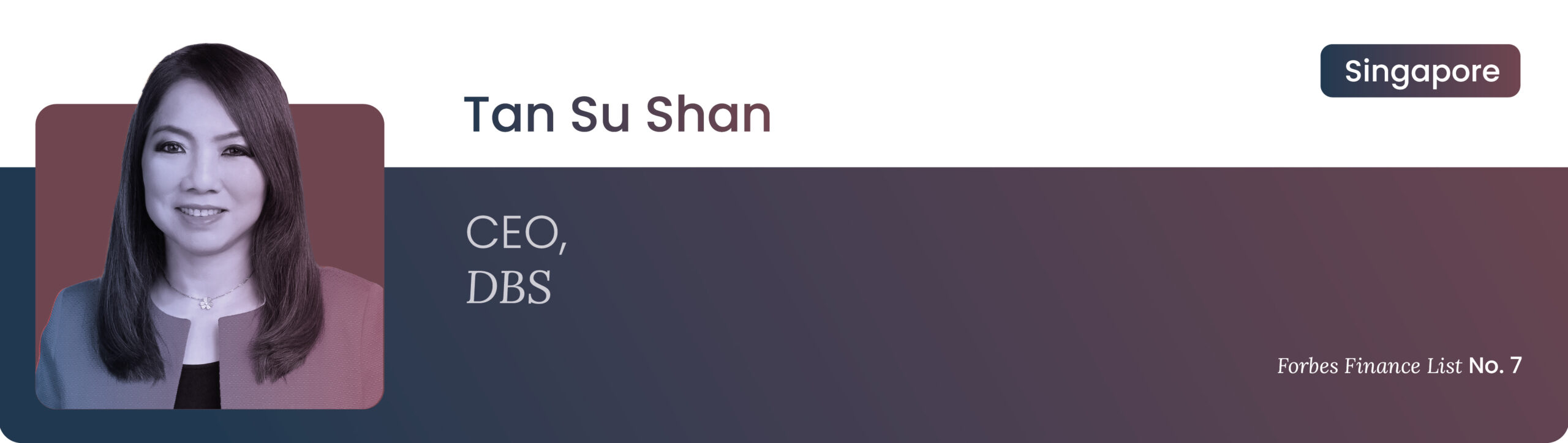
Tan Su Shan became CEO of DBS in March 2025, making history as the first woman to lead Southeast Asia’s largest bank, which manages about $637 billion in assets. Before taking the top role, she headed both the Consumer Banking & Wealth Management and Institutional Banking divisions, together responsible for roughly 90% of the bank’s earnings. Tan has been a key driver of DBS’s digital-first strategy, helping position the Singapore-based lender as one of the most innovative banks in the region. When she assumed the CEO role, she acknowledged she had “big shoes to fill,” while emphasizing that her leadership would mark a new chapter for the bank.
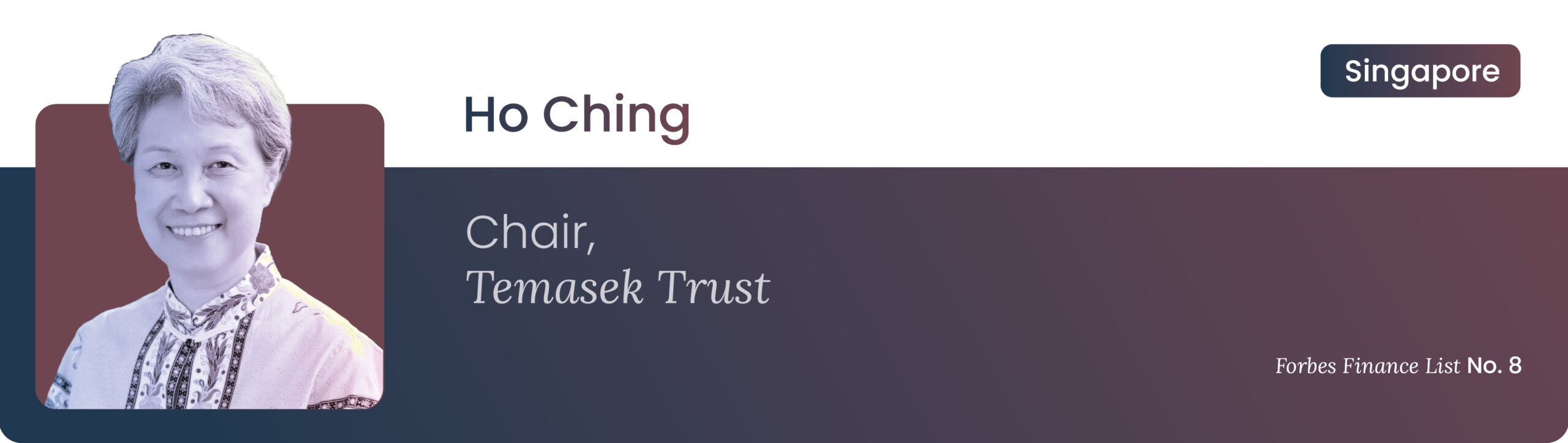
Ho Ching served as CEO of Singapore’s sovereign wealth fund Temasek from 2004 to 2021, overseeing significant growth that expanded the fund’s portfolio to more than $313 billion. In 2021, she became chairman of Temasek Trust, the organization responsible for managing the fund’s philanthropic initiatives and endowments. During her tenure at Temasek, Ho helped expand its global presence, including opening an office in San Francisco in 2018, and directed major investments into sectors such as life sciences, technology and agribusiness. She is also the wife of Singapore’s Prime Minister, Lee Hsien Loong.
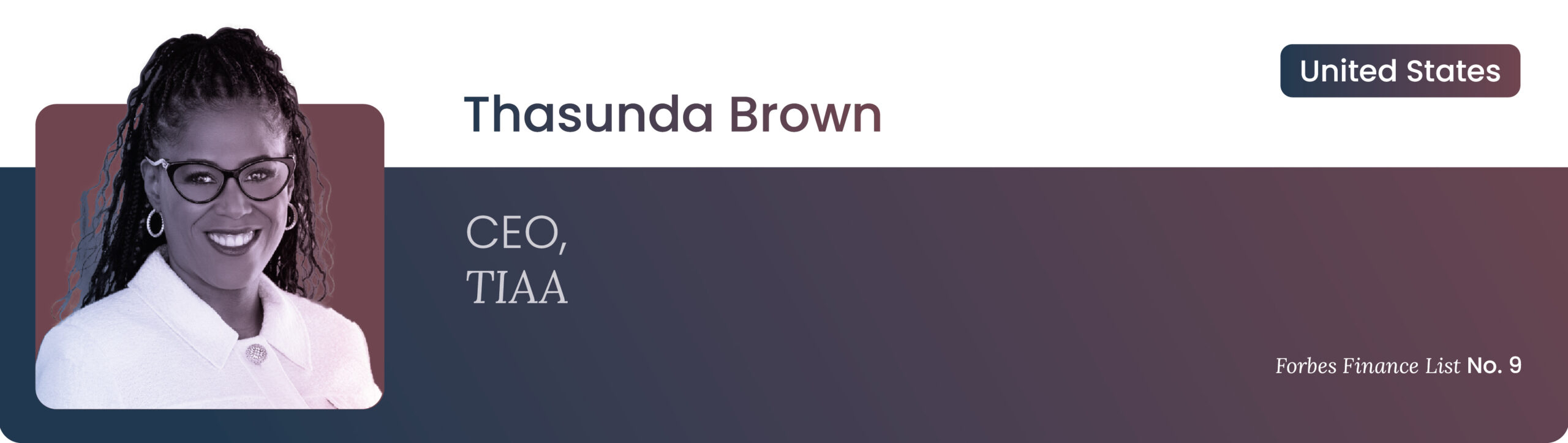
Thasunda Brown Duckett has been president and CEO of TIAA since 2021, leading the financial services organization that provides retirement solutions for workers in the academic, research, medical and public sectors. Before joining TIAA, she spent nearly two decades at JPMorgan Chase, where she served as CEO of Chase Consumer Banking, overseeing a nationwide network with more than $600 billion in deposits and around 50,000 employees. Earlier in her career, she worked at Fannie Mae, where she helped develop strategies to expand homeownership among Black and Hispanic communities. Brown Duckett also sits on several boards, including Nike, the Robert F. Kennedy Human Rights organization, Sesame Workshop and the National Medal of Honor Museum.
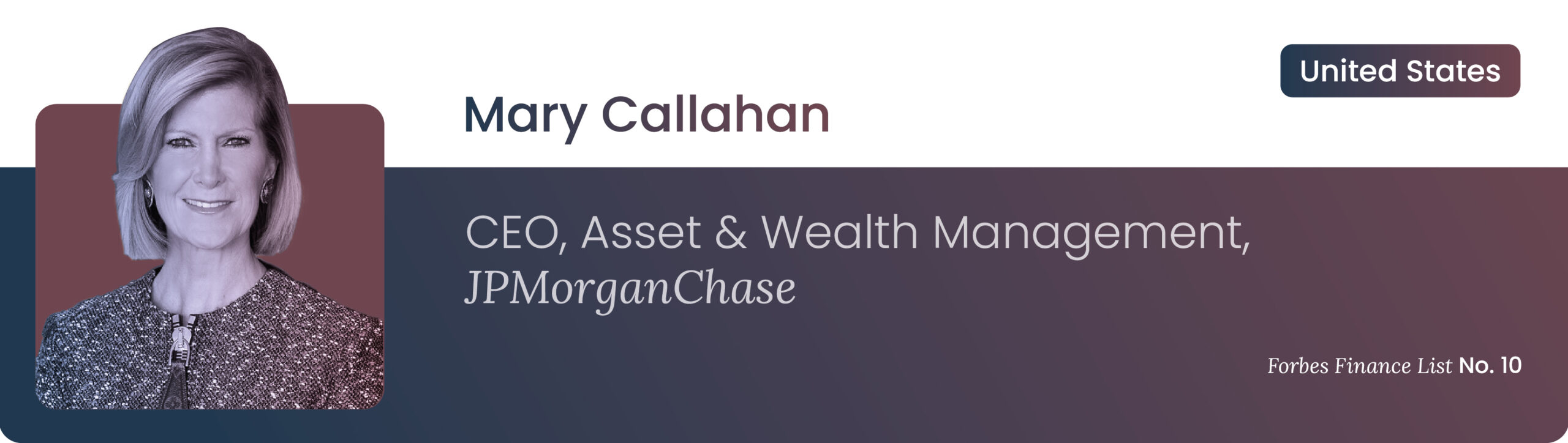
Mary Callahan Erdoes has led JPMorgan Chase’s wealth and asset management division since 2009, overseeing a business that manages around $6 trillion in assets. She joined the firm in 1996 as a fixed income portfolio manager and later rose to become CEO of JPMorgan’s private bank before taking on her current role. Under her leadership, the division has grown into one of the largest asset and wealth management operations in the world. Erdoes also serves on several boards, including the U.S.-China Business Council, the Robin Hood Foundation and the Harvard Management Company.