How investors can get on board with sustainable travel and transport



International tourism is expected to return to almost pre-pandemic levels this year, but this poses something of a conundrum. How do we combine the economic and wider benefits of travel with the increasing urgency of the need to tackle climate change?
The answer, quite clearly, is decarbonizing methods of transport and travel – but while the answer is simple, the process of getting there is not. However, this journey towards lower carbon travel is underway, and creating potential new opportunities for investors now and in the future.
From electric vehicles and sustainable aviation fuels to micro-scooters, we have seen a wave of innovation in the transportation sector over recent years, with new technologies popularising alternative methods of travel, and helping decarbonise existing ones.
Governments and policymakers are also taking drastic action in a bid to reduce emissions – France has banned short-haul flights where train alternatives exist, while the Netherlands has limited the number of flights at Schiphol airport, a key travel hub.
But governments don’t want to put the brakes on international travel and tourism – a sector that contributed 7.6% to global GDP last year and created 22 million new jobs. For many countries, attracting hordes of foreign tourists is vital to their economy.
However, travel and tourism account for between 8% and 11% of total global carbon emissions, according to varying estimates – which is almost certain to increase as travel activity is predicted to surge by 85% from 2016 to 2030. Passenger cars are the largest contributor to transport sector carbon emissions, at 39%, followed by medium and heavy trucks (23%) and shipping (11%). Rail travel accounts for just 3% of emissions.
Carbon emissions from transport by sub-sector
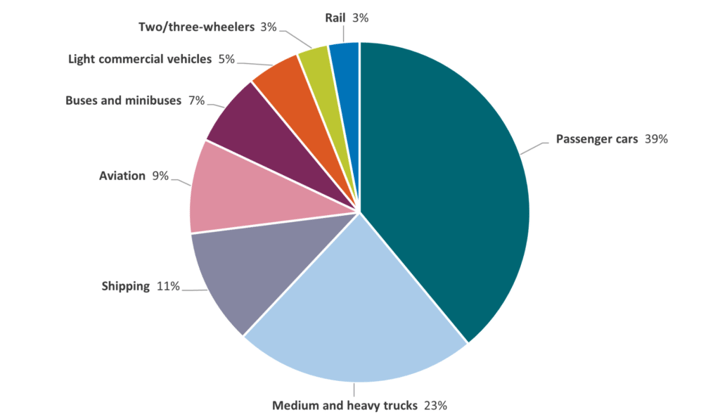
Source: Statista, based on 2021 data.
Driving potential investment opportunities
The economic downturn and high inflation are likely to mean consumers are more demanding when it comes to spending their money on leisure travel – and they are increasingly aware of the environmental impact and becoming more selective about sustainability issues when traveling.
There is an ongoing impetus from governments and policymakers, which we expect to only increase as they strive to meet climate targets, both in encouraging lower carbon forms of travel and granting incentives for investment in decarbonization.
Companies everywhere are setting sustainability targets, many including emissions from business travel, which represents nearly a third of all travel spend. We believe that those who are at the forefront of the transition to sustainable travel, whether directly or indirectly – such as via the infrastructure needed - are likely to benefit from increased customer demand.
As the market continues to return to, and likely exceed pre-pandemic levels, we see scope for potential investment opportunities for those who want to play a part in the journey to sustainable travel while also seeking financial returns.