Oil volatility and commodity resilience: Why real assets matter

11 JUL, 2025
By Greg Sharenow



Greg Sharenow, fund manager at PIMCO, outlines the continued resilience of commodities and their low correlation with equities and bonds amid recent geopolitical disruptions, highlighting their strength as portfolio diversifiers.
Oil risk premiums: Transitory for now
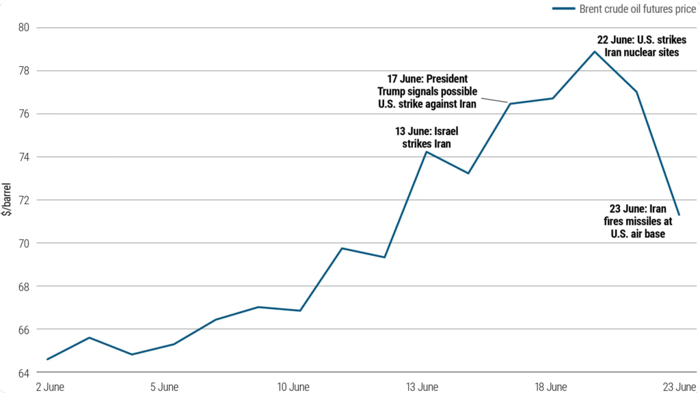
In the weeks leading up to last month’s Israeli and US attacks on Iran, oil prices rose—not due to actual supply disruptions, but in reaction to a geopolitical risk premium. Fears of a potential closure of the Strait of Hormuz stirred market anxiety, although those concerns ultimately did not materialise. Iran’s measured response helped ease tensions, and the risk premium quickly dissipated.
That said, the situation remains fluid. Ongoing concerns over Iran’s uranium reserves—and the possibility of further Israeli actions—mean the geopolitical backdrop remains a source of potential volatility.
Oil prices experienced significant volatility
OPEC spare capacity: A stabilising force
If tensions in the Middle East flare up again and Iranian oil supply is disrupted, we could see another price spike.
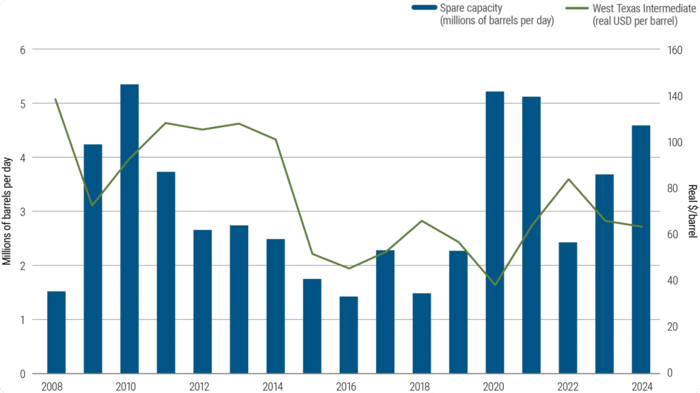
But there are key stabilisers in place: US shale producers can ramp up output if given enough time, and OPEC currently holds significant spare production capacity. While much of this capacity remains concentrated in conflict-affected regions, limiting its short-term ability to calm markets, it could serve as a longer-term stabiliser for supply dynamics.
These structural buffers may limit both the duration and magnitude of any price rally.
Therefore, although short-term volatility is likely, we continue to expect that oil prices will return to the $60 rangeafter any temporary spikes.
OPEC spare capacity
Commodities show resilience as investors seek inflation hedges
While oil has been particularly volatile, the broader commodities complex has remained remarkably stable this year.
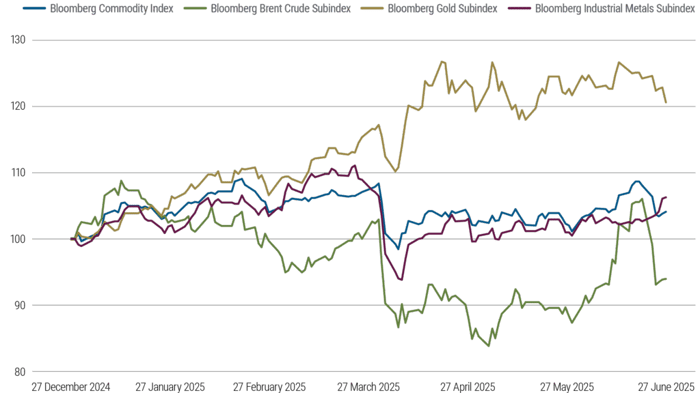
Gold prices continue to rise, supported by sustained central bank buying and ongoing de-dollarisation efforts. Base metals have also held firm, showing resilience even amid tariff-related growth concerns.
Investors, recognising that their portfolios were underexposed to real assets and more vulnerable to inflation than expected, have renewed interest in gold and commodities as a whole.
Overall, the Bloomberg Commodity Index has delivered strong returns, showing that a diversified commodity basketcan help weather sector-specific disruptions and contribute to portfolio stability.
Commodities index performance
Commodities as strong portfolio diversifiers
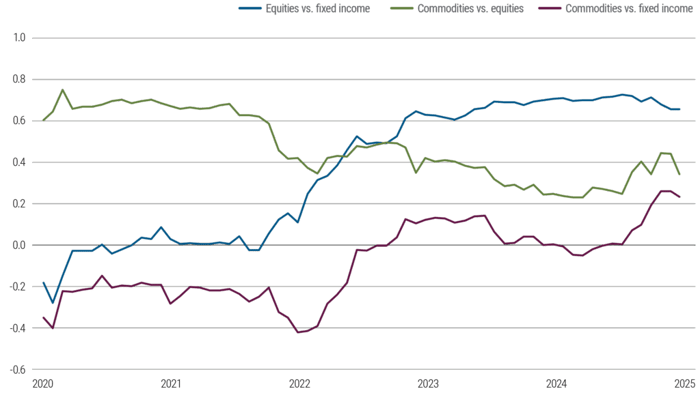
This diversification potential was also evident during the 2021–2022 inflation surge, when both equity and bond markets were challenged.
Commodities, however, maintained low correlations with both asset classes. They not only helped diversify portfolio risk, but also improved inflation sensitivity, which we believe could make them a valuable strategic allocation in today’s environment of persistent inflation uncertainty.
Three-year rolling correlations