One year after Liberation Day: markets adapt to a new trade reality

8 APR, 2026
By Joanna Piwko from RankiaPro Europe
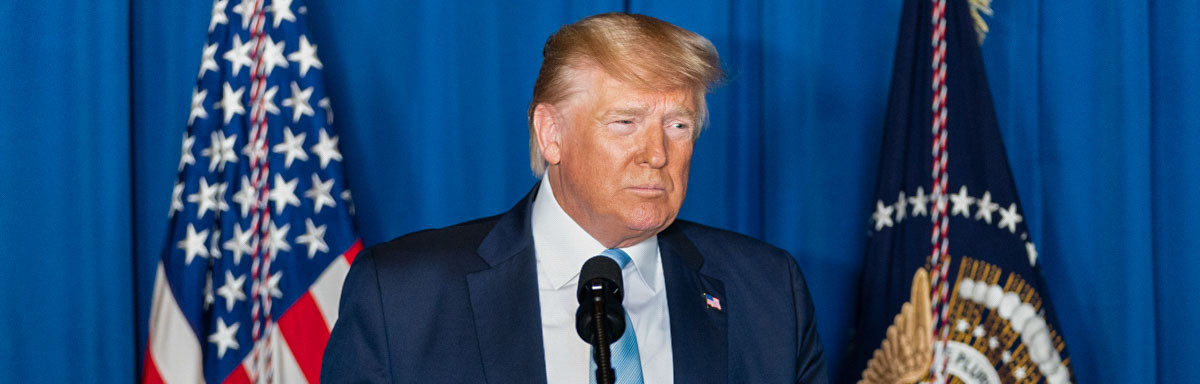


In April 2025 President Trump dubbed “Liberation Day”. The administration unveiled the most extensive tariff increase since the Smoot-Hawley Tariff Act. Today the global economic landscape offers a clearer picture of how trade tensions and tariff policies have reshaped – but not derailed – financial markets and global commerce. While the anniversary invites reflection, the dominant theme is not disruption, but adaptation.
According to Romain Aumond, quantitative strategist at Natixis IM Solutions, the initial fears surrounding tariffs have not fully materialized in market behavior. As he notes, it is clear that tariffs have had a limited impact on financial markets […] Markets have learned to adapt to the tone and noisy economic communication of the U.S. administration. This resilience highlights a broader trend: investors are increasingly desensitized to political rhetoric, focusing instead on underlying economic fundamentals.
Indeed, global trade has proven more robust than expected. Aumond emphasizes that global trade, measured in volume, has not been negatively affected and continued to grow over the year, revealing winners and losers in a gradual process of reconfiguration. Rather than contraction, the past year has brought a redistribution of trade flows, signaling a structural shift rather than a cyclical downturn.
At the heart of this transformation lies Asia’s growing dominance. Global trade data highlights a new equilibrium, in which Asia – both developed and emerging economies – together with China, is driving global export dynamics, Aumond explains. This marks a significant evolution in the global economy, as traditional export powerhouses, particularly in Europe, face increasing competition and relative decline in influence.
This rebalancing has also contributed to broader macroeconomic effects. The rise of global overcapacity – particularly in manufacturing – has introduced what Aumond describes as a disinflationary force in the global economy, at least prior to recent geopolitical developments in the Middle East. Meanwhile, demand patterns further underscore this shift: global imports have been driven largely by Asia and the United States, pointing to where consumption remains strongest.
For investors, the message is clear. The past year has not only confirmed the resilience of global markets but also highlighted the importance of understanding structural change. As Aumond concludes, investors should take note of this reconfiguration of trade.
One year after Liberation Day, the global economy has not fractured – it has evolved. And those best positioned to navigate this new paradigm will be those who recognize that the rules of trade are not breaking, but being rewritten.