Real Estate’s Role in Long-Term Investment Strategies

16 JAN, 2025


The real estate (RE) market, following two years of correction, is showing signs of recovery, making it a compelling entry point for investors.
With an optimal portfolio allocation of 5% to 15%, REITs may be underutilized despite offering significant benefits to investors. Listed-equity REITs, outperform other asset classes over longer time horizons. Janus Henderson Horizon Global Property Equities, Europe’s largest REIT fund, focuses exclusively on capital appreciation, and Cohen & Steers Global Realty Focus is a highly concentrated to achieve higher capital gains.
However, income remains the most consistent driver of returns in real estate, primarily through rental yields—a strategy exemplified by Cohen & Steers Rentals. Additionally, REITs are legally mandated to distribute 90% of their income as dividends. Real estate also stands out as the most effective asset class for hedging against inflation, outperforming equities and commodities. Total return is the most comprehensive approach to capture both rental income and property value appreciation, as markets face chronic housing undersupply, with critically low capacity in multi-family housing, hospitality, and logistics sectors, where remains.
REITs offer unique diversification benefits
- Low Sensitivity to Interest Rates: Thanks to steady rental income, REITs are less affected by rate fluctuations. For instance, REIT funds like Amundi Index Solutions delivered returns of up to 36% over the past year despite rate volatility.
- Distinct Market Cycles: Real estate operates on longer cycles (around 18 years) compared to equities (4-5 years), resulting in elastic correlation between these asset classes.
- The inherent fragmentation of the real estate market further enhances diversification opportunities.
- Contrarian Strategies by Brookfield can introduce further reducing correlation with traditional asset classes.
Trends unlocking Real Estate's value
Unlocking value in Real Estate’s profound transformation, driven by long-term secular and macroeconomic trends such as demographics, digitalization, and decarbonization. These forces are reshaping opportunities across residential, commercial, and industrial sectors.
Demographics and Social Changes
- The residential sector must adapt to an aging Western population with accommodations tailored to their needs.
- Post-pandemic lifestyles, including increased online activities, are fuelling growth in data centers. Rising travel and leisure demand benefit hospitality and entertainment (shortages in live-event venues).
- Commercial real estate faces challenges: hybrid work models are impacting office demand, while e-commerce is reshaping and reducing the need for traditional retail spaces.
Deglobalization
- The reorganization of supply chains is driving “near-shoring” of manufacturing and storage facilities to safer, more localized regions.
- A shortage of estates designed for R&D has become a national security concern in some countries.
Urbanization
Urban centers, as the largest contributors to GDP and population growth, catalyze new trends. Schroder Global Cities Real Estate leverages this megatrend with a focus on sustainable investment, aligning with Article 9 objectives.
Decarbonization and Affordability
Europe leads in ESG-aligned investments, driven by regulatory frameworks, while the U.S. faces polarized perspectives influenced by political debates.
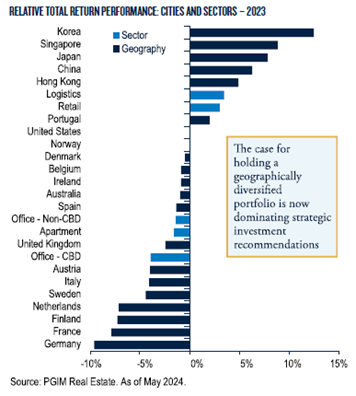
Regional allocation plays a more significant role in driving performance than sectoral choices. Asia offers the strongest growth potential, while Europe, accounting for around 20% of typical allocations, faces more uncertain prospects. The U.S., with its mature and dynamic market, typically dominates portfolios, representing 60% or more of the total allocation.
Beyond Listed-Equity REITs
- Schroders Semi-Liquid Real Estate Total Return: structured as a SICAV Part II can allocate 70-80% of its portfolio directly to private estates.
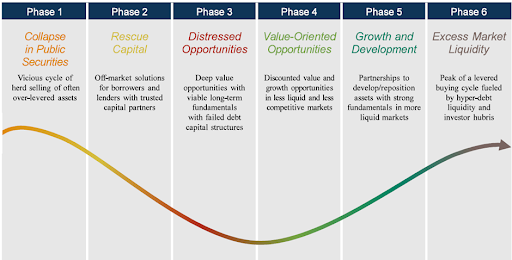
- Oaktree Real Estate Opportunities AIF: This "go-anywhere" multi-asset solution dynamically reallocates its portfolio across the real estate universe in response to economic cycles. It identifies opportunities in distressed debt, discounted listed securities, and direct financing operations, such as providing rescue capital.
If you want to discover more insights on Real Estate investment, don't miss the special issue of our latest magazine! Find out here the perspectives on Real Estate investment from leading investment professionals.