Spain election’s right around the corner: latest polls and three themes Ostrum (Natixis IM) is watching

5 NOV, 2026
By Joanna Piwko from RankiaPro Europe
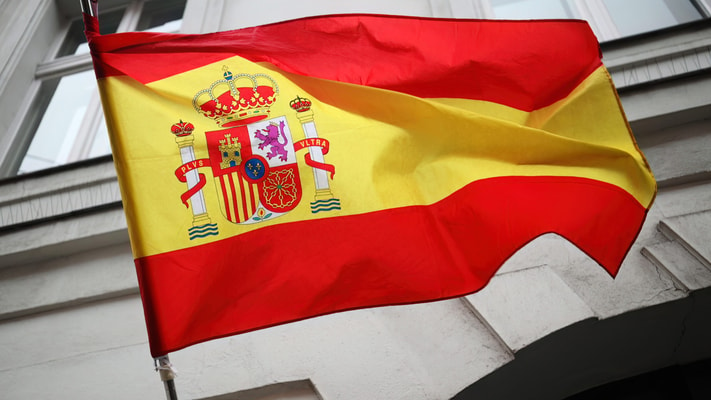


The Spain election 2026 is now just weeks away. Prime Minister Pedro Sánchez brought the vote forward from 2027 after his housing reform was defeated in Congress in early October, amid large-scale protests over rents and evictions. With the polls pointing to a fragmented parliament, investors are asking what the result could mean for one of the euro area's best-performing economies.
Below we look at the latest poll numbers and at the three themes highlighted by Natixis Investment Managers affiliate Ostrum AM in its pre-election analysis of the Spanish economy.
Spain election 2026: what the latest polls say
According to the PolitPro Election Trend, a weighted average of all major polling institutes as of 4 November 2026, the PP is the strongest force, 4.0 points ahead of the PSOE. Both main parties are below their July 2023 results, while Vox has gained more than six points and the new left-wing alliance Frente Amplio enters the picture on 6.7%.
| Party | Poll average (%) | Change vs 2023 (pts) | Projected seats |
|---|---|---|---|
| PP | 30.1 | -3.0 | 130 |
| PSOE | 26.1 | -5.6 | 112 |
| Vox | 18.7 | +6.3 | 80 |
| Frente Amplio | 6.7 | new | 28 |
| ERC | 2.3 | +0.4 | – |
| Podemos | 2.3 | new | – |
| Se Acabó La Fiesta | 1.8 | new | – |
| EH Bildu / Junts | 1.3 each | -0.1 / -0.3 | – |
| Others | 9.7 | – | – |
An absolute majority in the Congress of Deputies requires 176 of 350 seats. No single party gets close, but on PolitPro's projection a PP–Vox combination would reach 210 seats, while the current PSOE–Sumar governing alliance would take just 40% of the chamber. PolitPro's Monte Carlo simulations put the PP's chances of finishing first at around 95%.
Individual polls tell a similar story, with one notable exception. The most recent surveys from Sigma Dos, NC Report and EM-Analytics (29–30 October) place the PP between 31.1% and 33.0% and the PSOE between 24.6% and 25.8%. The state-run CIS remains the outlier, with its 6 October survey putting the PSOE ahead on 34.0% against 22.2% for the PP.
How Spain's electoral system shapes the result
Seats are allocated by the D'Hondt method across 52 constituencies, and the 3% threshold applies per constituency rather than nationally. Because many provinces elect only a handful of deputies, the system tends to reward large national parties and strong regional ones, so small shifts in vote share can translate into large swings in seats.
Three themes Natixis IM's Ostrum AM is watching
In a three-part series published ahead of the vote, Ostrum AM examines the state of the Spanish economy, the housing crisis and migration policy. Its overall message is that politics is unlikely to derail growth in the short term, but that the direction of policy after the election will matter.
1. Solid growth fundamentals the election is unlikely to change
Spain has clearly outperformed the euro area since 2022, with growth driven mainly by domestic demand. Private consumption has benefited from a strong labour market and rising real incomes, while investment has been supported by disbursements from the EU's Recovery and Resilience Facility.
3.7%
Average annual GDP growth, 2021–2025 (euro area: 1.7%)
2.4% of GDP
Public deficit in 2025, down from 3.3% in 2023 (euro area: 2.9%)
100.5% of GDP
Public debt in 2025, from 105.2% in 2023; expected below 100% in 2026
Growth has continued in 2026, with GDP up 0.6% in the first quarter and 0.7% in the second, compared with 0.3% in both quarters for the euro area excluding Ireland. Public finances have improved even though the Sánchez government has not passed a new budget since 2024, largely thanks to strong nominal growth.
Ostrum AM expects a change of government to have only a limited impact on the growth outlook. 'If anything, the effect could be slightly positive for domestic demand, given that both parties favour tax cuts and stronger incentives for private investment, while maintaining a generally prudent fiscal stance', the asset manager notes. A more stable parliamentary majority could also end the budget deadlock of recent years.
2. The housing crisis at the centre of the campaign
Housing is the issue that triggered the election, and Ostrum AM sees it as one of the main campaign themes. Spain is among the euro area countries with the fastest house price growth, driven by rising real incomes, ECB rate cuts between June 2024 and June 2025, strong population growth and demand from non-resident buyers – while supply has struggled to keep up.
| Indicator | Latest figure |
|---|---|
| House price growth (y/y, Q2 2026) | 12.1% |
| Resale homes / new homes (INE) | +12.9% / +7.4% |
| Average rent (September 2026) | €15.1/m², +5.6% y/y (after +8.5% in 2025) |
| New households created in 2025 (Banco de España) | 240,000 |
| Homes completed in 2025 | Fewer than 100,000 |
| Cumulative housing shortfall, 2021–2025 (Banco de España) | 750,000 homes |
| Projected shortfall by 2028 (Banco de España) | 1 million homes |
Ostrum AM points to structural constraints on supply, including a shortage of buildable land, slow project execution, inefficient planning and licensing procedures, labour shortages in construction and rising building costs. Price rises have been sharpest in Madrid and Barcelona, along the Mediterranean coast and in the Balearic and Canary Islands.
'The differences between the political proposals are clear', Ostrum AM says. The PSOE favours greater public intervention, rent controls and a larger social housing stock, while the PP focuses on measures to increase supply and on tax incentives. For context on how Spain compares with other markets, see the UBS Global Real Estate Bubble Index 2026.
3. Migration policy: the key medium-term issue
Strong net migration, mainly from Latin America, has been a key driver of Spain's outperformance. According to think tank FUNCAS, immigration accounted for 47% of Spain's cumulative economic growth between 2022 and 2025, boosting both the labour force and participation rates.
Ostrum AM warns that a future PP–Vox coalition could shift towards a more restrictive migration policy. That could slow labour force growth, worsen labour shortages and weigh on growth, especially in sectors that rely heavily on immigrant workers such as tourism, construction and agriculture. In its view, if the PP and Vox form a government, 'the main issue to watch will be the future direction of migration policy'.
What it means for investors
Ostrum AM's base case is reassuring: the election is unlikely to change Spain's solid growth momentum or its generally prudent fiscal stance in the short term. On the positive side, a clearer majority could unlock a new budget and reduce political uncertainty. On the risk side, a fragmented result, a slow investiture or a sharp turn in migration policy could weigh on the labour supply that has underpinned growth.
Other managers share parts of this view. As covered in our five questions on Spain's snap election, the role of Vox, the speed of the investiture and the fate of the 2027 budget are the points to watch, while the vote also adds to Europe's busy election calendar for markets.
Conclusion
With the PP leading the polls and no party near a majority, the Spain election 2026 is likely to come down to coalition arithmetic, with Vox's role the key variable. Voter turnout and mobilisation on both sides could still shift the balance in a system where small swings move many seats.
For Ostrum AM, the economic fundamentals – strong growth, falling deficits and debt – look robust whatever the outcome. The questions for the next government are how it tackles a housing shortfall heading towards one million homes, and whether its migration policy preserves the labour force growth that has kept Spain ahead of its euro area peers.