Starmer Resignation: markets stable, but UK fiscal risk is structural
23 JUN, 2026


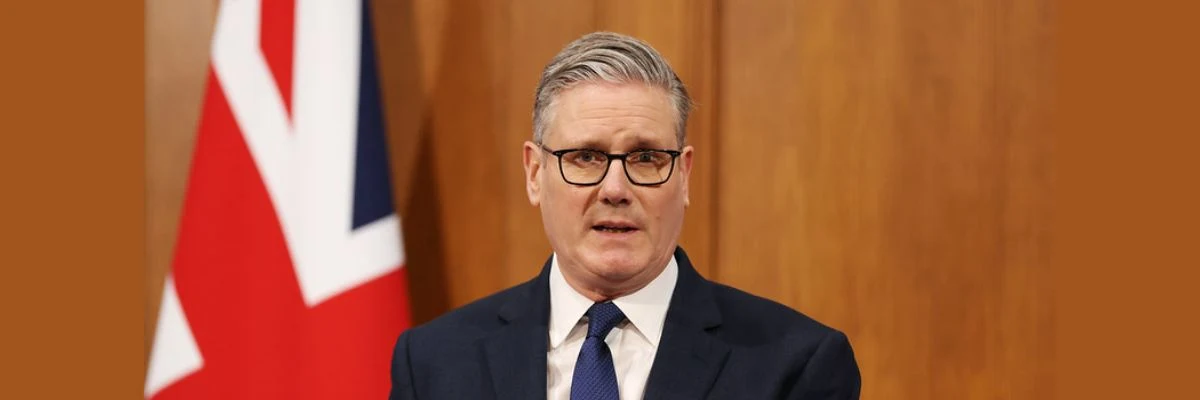


The resignation of Keir Starmer as Prime Minister of the United Kingdom, announced on Monday, June 23, 2026, was widely anticipated by the markets. Andy Burnham, Mayor of Greater Manchester and leading figure of the Labour left wing, emerges as the most likely successor at Downing Street.
The immediate reaction of gilt, sterling and British equities was contained, but three international managers warn that the current calm should not be mistaken for structural stability: the UK's fiscal challenges predate the political crisis and will not be resolved with a change of leadership.
How did the markets react to Starmer's resignation?
The reaction was orderly. Hervé Prettre, Head of Global Investment Research at Edmond de Rothschild, reports that 10-year gilt yields fell from 4.84% to 4.80% and the FTSE 100 slightly outperformed the Stoxx 50.
Martin Wolburg, senior economist at Generali Investments, points out that the FTSE 250 (more exposed to the domestic economy) underperformed, while the pound recorded slight gains after Wes Streeting supported Burnham's candidacy, reducing the risk of a long internal battle for leadership.
The common thread in all three analyses is that the resignation was widely discounted. As Prettre (Edmond de Rothschild) summarizes, Burnham "is not perceived as an extremist": he successfully managed Manchester, committed to respecting Rachel Reeves' fiscal rules and ruled out increases in income tax, social security contributions and VAT.
Who is Andy Burnham and why are the markets looking at him with relative caution?
Burnham has two paths to Downing Street: winning the Labour leadership race or being elected unopposed. Wolburg (Generali Investments) indicates that, if a serious rival does not emerge, he could take office as early as mid-July. For the markets, the quicker the succession, the better: every week less of uncertainty reduces the associated volatility.
Burnham's profile, however, contains elements that markets monitor. He aims for a more interventionist government model, with emphasis on decentralization, reindustrialization, and a return to public control (not public ownership) of water, energy, and railways. Wolburg (Generali Investments) is direct: "the key issue for markets will be implementation, not ideology". The real test will come with the composition of the cabinet and the autumn fiscal plans.
What fiscal risk does the change of government represent for UK gilts?
Here the three analyses converge on the same diagnosis. Kevin Thozet, Portfolio Advisor and member of Carmignac's Investment Committee, frames the risk precisely: it is not about a collapse of credibility "à la Truss" through unfunded tax cuts, but about "a gradual and lasting erosion of fiscal credibility, driven by increasing structural spending commitments and a slower pace of debt reduction". With high debt service costs, weak growth and durable rates, any increase in spending would require more gilt issuance, more permissive fiscal rules or cuts elsewhere.
Prettre (Edmond de Rothschild) adds a specific element: Rachel Reeves' succession to the Treasury could become a major factor for fiscal credibility, given her role as an anchor for bond investors. Investors have already slightly reduced expectations on Bank of England rates, now pricing a single hike to 4% by December compared to the current 3.75%.
What does the UK term premium signal to bond investors?
Thozet (Carmignac) offers the most structural reading on the gilt market. The UK's 10-year term premium is converging towards that of traditional European fiscal laggards, with investors requiring increasing compensation to offset budget uncertainty and the risk of future gilt supply. The UK is set to have its seventh Prime Minister in a decade: in the same period, France has had nine and Italy five.
On the pound, Thozet maintains a cautious positioning: the GBP already appears expensive on several valuation indicators. The specific risk is that rising yields stop reflecting monetary attractiveness and start signaling fiscal deterioration: in that scenario, higher rates would become sterling-negative rather than sterling-positive.
Conclusion
Starmer's resignation closes a political crisis, not a market crisis. The contained reaction of gilt and sterling reflects a simple fact: the transition was expected and Burnham is not perceived as an extreme risk. But the real test is not the political succession, it's the fiscal autumn: cabinet composition, spending review and credibility of the fiscal rule will determine whether the UK consolidates or accelerates its trajectory towards a structurally higher term premium. For investors, the current stability window is an opportunity to assess exposure, not to lower the guard.
Disclaimer: This article is for informational purposes only and does not constitute financial, tax or legal advice, nor an offer to buy or sell financial instruments. The opinions expressed reflect the assessments of Carmignac, Generali Investments and Edmond de Rothschild as of the publication date (June 23, 2026) and are subject to change without notice. Past performance is not a guarantee of future results.