Strait of Hormuz: what changes for markets and portfolios after the USA-Iran agreement

16 JUN, 2026
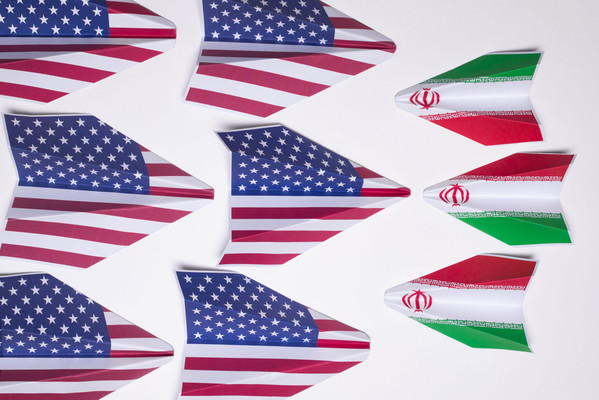


Almost four months of naval blockade in the Strait of Hormuz have redrawn the global risk maps: diverted trade routes, eroding energy reserves, central banks forced to deal with an inflationary shock that no model had incorporated.
The announcement, on the weekend of June 14-15, of a memorandum of understanding between the United States and Iran marks the first concrete reversal of trend. The signature is expected on June 19 in Switzerland: gradual reopening of the Strait, removal of mines, ceasefire extended to all fronts for 60 days, release of about 24 billion dollars in frozen Iranian assets. But what does it imply for portfolios, central banks and asset allocation in the coming quarters? Four investment houses analyze the consequences.
What happens to the price of oil after the reopening of Hormuz?
The price of crude oil has already approached 80 dollars a barrel, reflecting investor optimism about a normalization of supplies. Luca Simoncelli, Investment Strategist at Invesco, emphasizes that the recovery of trade flows "joins some elements that the market is beginning to discount such as the slower than expected erosion of strategic reserves and the new balances that are forming among the Gulf producers after the United Arab Emirates' exit from OPEC."
However, a return to pre-conflict levels seems unlikely. Lee Hardman, Senior Currency Analyst at MUFG, is explicit: "we doubt that the price of oil can return to pre-conflict levels, below 70 dollars a barrel, as it will take time for supplies to fully return to operation, reserves have been reduced and a higher geopolitical risk premium will still be required."
Samy Chaar (Chief Economist, CIO Switzerland, Banque Lombard Odier & Cie SA) and Luca Bindelli (Head of Investment Strategy, Banque Lombard Odier & Cie SA) estimate an average Brent price of 90 $/barrel in the six months from the conflict and a 12-month target of 78 $/barrel, with a full recovery of reserves extending until 2027.
What are the macro implications: does the risk of stagflation decrease?
The reopening of the Strait redraws the global macroeconomic scenario. Simoncelli (Invesco) indicates that "the probability of a substantial drop in the price of oil increases and likewise the risk of stagflation decreases", opening up to a possible cyclical recovery. Chaar and Bindelli (Lombard Odier) keep global growth forecasts unchanged at about 3% for 2026, highlighting the resilience of the American economy.
On the inflation front, the picture is more complex. Simoncelli warns that "the evidence of a rise in the inflation rate in the coming months is increasingly confirmed" and that long-term expectations remain under observation: in the United States, the University of Michigan's data on 5-10 year inflation expectations has risen to 3.9%. The de-escalation mitigates the energy shock, but does not eliminate the risk of a more restrictive monetary policy.
How does the dollar react and which currencies benefit from the agreement?
The US dollar continued to weaken after the weekend announcement, and Hardman (MUFG) sees room for further correction of the gains accumulated during the conflict. Among the G10 currencies, the main beneficiary was the Swedish krona, which since the beginning of the conflict had been the currency with the worst performance. On the Asian front, the Indonesian rupiah has already gained almost 1% against the dollar at the beginning of the week.
Paulo Salazar, Head of Emerging Markets at Candriam, frames the dollar's weakness as a structural catalyst: "historically, periods of dollar weakness have coincided with a stronger performance of emerging market equities and local currencies, thanks to the improvement of external financing conditions and the expansion of capital flows outside the United States." A context that, for Salazar, represents "one of the most favorable macroeconomic contexts for emerging markets that we have observed in recent quarters."
Central banks: what will the ECB and Fed do after Hormuz?
The ECB has already carried out a first preventive rate hike, with a unanimous decision. Simoncelli (Invesco) points out that "President Lagarde has communicated greater flexibility in the timing of the hikes, hinting at a first pause already in the next meeting in July." A sign of caution that reflects dependence on data rather than a predefined path.
On the Fed front, Hardman (MUFG) predicts that the new president Kevin Warsh will choose to "look beyond the energy price shock by keeping interest rates unchanged", a scenario now more likely after the agreement. The main risk remains that Warsh signals instead an active evaluation of hikes: "there is still room for Treasury yields and the dollar to weaken further if Kevin Warsh does not surprise the markets with a particularly aggressive message."
How to reposition the portfolio: which assets benefit from de-escalation?
Lombard Odier maintains a moderately pro-risk stance, with a rotation in progress: technology reduced to neutral, financials, utilities and healthcare promoted to preferred sectors. In variable income, preference goes to emerging and small cap USA, which benefit from American economic resilience and valuations still contained compared to developed markets. For sovereign bonds, preference goes to titles with a 5-7 year maturity in the UK, eurozone, Australia and Switzerland.
Salazar (Candriam) identifies a rotation also within the emerging: the energy sector could give up part of the geopolitical gains, while materials and precious metals could recover ground as attention shifts "from the risk of war to the drop in rates, the weakening of the dollar and the improvement of liquidity conditions." Geographically, the main beneficiaries are the net oil importing countries: some areas of Asia, South Africa and Latin America, where central banks still have room to continue easing cycles.
Conclusion
The agreement on Hormuz does not resolve all Middle Eastern tensions, but it removes the main energy constraint that weighed on the global economy. The market has already priced in much of the good news, as signaled by the corrections of oil and the dollar in the hours following the announcement. The real test will be the coming weeks: the speed of return of ships in transit, the communication of the Fed under Warsh and the evolution of negotiations on the Iranian nuclear issue within 60 days.
For portfolios, the direction is towards cyclical assets, emerging and quality bonds with medium duration, with active risk management of the reopening of hostilities.
Disclaimer: This article is for informational purposes only and does not constitute financial, tax or legal advice, nor an offer to buy or sell financial instruments. The opinions reflect the evaluations of the respective management companies at the date of publication and are subject to change without notice. Past performance is not a guarantee of future results. Emerging market debt involves specific risks: currency volatility, geopolitical risk, liquidity risk, sovereign and corporate credit risk.