The ECB keeps interest rates unchanged at 2%. Experts share their predictions for next steps

20 MAR, 2026
By Joanna Piwko from RankiaPro Europe
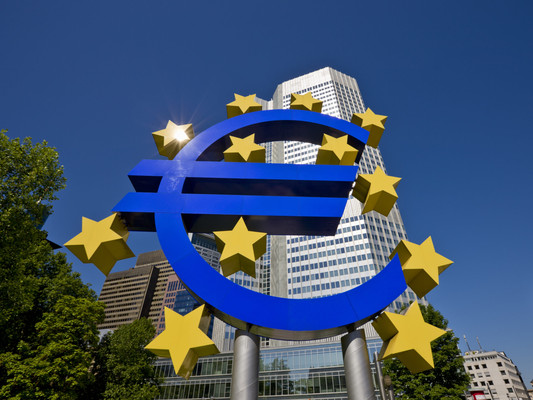


The European Central Bank has opted to hold interest rates steady at 2%, but rising energy prices linked to the Middle East conflict are clouding the outlook. While inflation risks are tilting to the upside, weakening growth prospects and high uncertainty are keeping policymakers cautious. Analysts agree the ECB is in wait-and-see mode, with future decisions hinging on energy markets and second-round inflation effects.

The ECB remains firm amid rising stagflation risks
Irene Lauro, Senior European Economist at Schroders
The ECB has kept interest rates unchanged as the rebound in oil and gas prices since the start of the conflict with Iran introduces new uncertainty into economic prospects that had finally begun to improve.
Rising energy costs inevitably push headline inflation higher, but the monetary policy dilemma revolves around second-round effects: whether wage dynamics and core inflation reaccelerate, or whether growth slows enough to keep inflation anchored over the medium term.
Downside risks to growth have intensified, as the disruption to liquefied natural gas supply from Qatar leaves the eurozone exposed at a time of seasonally low gas reserves. The looming scramble for gas, with Europe and Asia competing head-to-head, risks keeping energy prices elevated for longer and further undermining growth.
Markets are currently assuming this is a temporary crisis. If that proves to be the case, the ECB may look through short-term volatility in energy inflation. However, this is a risky assumption, and the ECB is likely to remain firmly data-dependent to preserve flexibility in such an uncertain environment.

European Central Bank reaction: a shift in tone
Konstantin Veit, Portfolio Manager at PIMCO
Although the ECB left its key interest rates unchanged, it adopted a more hawkish tone in response to developments in the Middle East.
The ECB now expects inflation to be well above target in the short term, before returning to 2% over the course of next year.
While President Lagarde highlighted the differences compared to 2022, she also made it clear that the ECB would do whatever is necessary to ensure price stability over the medium term.
We believe it is too early to form a firm view on the policy response, as the intensity and duration of the crisis remain highly uncertain.
The ECB will be attentive to second-round effects on core inflation and will closely monitor inflation expectations.
For now, we only expect hawkish communication, but we believe the threshold for the ECB to completely look through a period of above-target inflation is somewhat higher than it was before 2022.
Different starting conditions, a monetary policy less anchored to a central scenario, and a reduced reliance on macroeconomic models could result in a more flexible ECB.
If the ECB were to act over the course of this year, at present we do not expect it to raise rates beyond what is already priced in by the markets.

Felix Feather, Economist at Aberdeen Investments
The ECB’s decision to keep interest rates at 2% comes as no surprise, as it had long been signaled that they would remain unchanged. However, with oil and gas prices surging, the key focus today was not the decision itself, but rather searching for clues about the ECB’s reaction function going forward. In this regard, the publication later today of the scenario analysis and President Christine Lagarde’s press conference will provide further clarity.
For now, the emphasis on upside risks to the inflation outlook in its statement, along with the upward revision of 0.7 percentage points to baseline inflation forecasts for 2026, points to the bank’s concern about a resurgence of inflationary pressures and its willingness to respond with rate hikes.
We expect the ECB to raise rates at least once before the end of this year. The pace and timing of these increases will depend on the duration of the conflict in the Middle East.

ECB meeting: well positioned
Andrea Campisi, Senior Investment Manager at Pictet Asset Management
The ECB kept interest rates unchanged in a context where the conflict in the Middle East complicates the status quo. Projections showed an upward revision to inflation expectations and a downward revision to growth, with more significant impacts in the short term, while uncertainty remains high. The Governing Council also stressed that the key factors will be the duration, intensity, and transmission of the shocks caused by the conflict—becoming more severe the longer the energy supply shock persists—while emphasizing that the current monetary policy stance is optimal to act in either direction. This is why long-term market inflation expectations remain anchored around the ECB’s target.
President Lagarde therefore kept all options open, not giving in to the uncertainty driven by short-term shocks and validating the current approach while awaiting greater visibility on the impact of the crisis in Iran. She reiterated a meeting-by-meeting, wait-and-see approach and highlighted the differences compared to the 2022 energy crisis, when the economy was overheating and inflation was running at around 6%, compared with today’s ‘3x2’: 2% inflation expectations, 2% current inflation, and a 2% level of key interest rates.

ECB in wait-and-see mode between inflation and growth, but energy uncertainties remain
Antonella Manganelli, CEO of Payden & Rygel Italy
Lagarde pointed to resilient domestic demand and inflation well anchored to the target, while reiterating the willingness to act in the event of energy shocks. The new projections show slightly higher inflation, remaining above target in the medium term, while growth estimates have been revised downward, reflecting the negative impact of rising energy prices on real income. The ECB’s stance proved less hawkish than markets had expected, maintaining a flexible approach with decisions taken on a meeting-by-meeting basis.
Following the announcement and press conference, market reactions were fairly contained. The two-year swap rate, an indicator of short-term rate expectations, moved to around 2.60% (from 2.52% previously), while German government bond yields held onto the gains recorded during the day, with the two-year up by around 11 basis points to 2.56% and the ten-year close to 3%. Overall, the market continues to price in around two rate hikes by September 2026. In the currency market, the euro strengthened slightly against the dollar, trading in the 1.14–1.15 range, supported by relative rate expectations that only partly offset dollar demand during periods of heightened risk aversion.
In our view, however, these expectations for rate hikes appear aggressive: we do not believe the ECB will necessarily be forced to raise rates, and in the event of a relatively swift resolution of the conflict, such expectations could quickly unwind. Much will depend on energy price dynamics and second-round effects on inflation: only in a scenario where oil remains above $100 for several months might the ECB find itself with no alternative. However, this is not our base case. The environment therefore remains highly uncertain and closely tied to developments in energy markets.

Sandra Rhouma, Vice President and European Economist, Fixed Income Team at AllianceBernstein
In this uncertain environment, the ECB remains relatively neutral, stressing the Governing Council is calm, determined, and focused. New forecast and scenario analysis show higher inflation over the forecast horizon, yet the ECB remains well positioned and data dependent.
2022 trauma versus 3 times 2 environment. Headline inflation is expected to average 2.6% in 2026, 2.0% in 2027 and 2.1% in 2028, up from 1.9%, 1.7% and 2% in their December forecast. Core inflation is projected at 2.3% in 2026, 2.2% in 2027 and 2.1% in 2028, as some passthrough was judgmentally modelled. Growth was revised down to 0.9% in 2026, 1.3% in 2027 and 1.4% in 2028. For now, neither the forecast nor the incoming data is calling for urgent action. The magnitude and duration of the current disruptions will determine future policy action. President Lagarde highlighted key differences with the 2022 energy shock, when headline inflation was already at 6% and rates at the zero lower bound. She characterized the current environment as ‘3 times 2’: headline inflation is at the 2% target; inflation expectations anchored at 2% and rates at 2% neutral. The Governing Council is therefore not panicking and feels comfortable for now.
The ECB will remain on hold. Before the war, the bar for further easing was getting higher given the ECB’s reluctance to recognize medium-term undershooting risks. It is now reasonable to expect the ECB to remain on hold this year.Given the near-term inflationary shock, there is no need to ease in this context. A lot of information will need to be monitored in the upcoming months to assess whether hikes will be warranted as the market currently prices. Inflation expectations could be more sensitive to energy shocks as the memory of 2022 is still fresh. Meanwhile, the macro backdrop suggests that the passthrough could be more limited this time around. Time and data will tell but the best policy action for now is no action. The cost of prematurely raising rates could be significant, especially if there is a quick resolution to the war. That said, the probability of rate hikes is certainly higher now than it was before the war and increases as the war continues.