Transforming Asset Management Through Fund Selectors

13 JAN, 2025
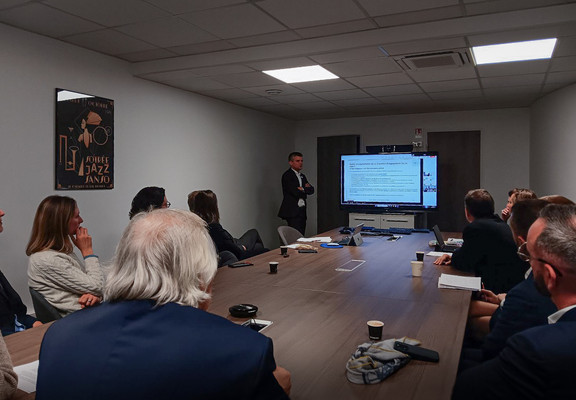


RankiaPro Europe: Insights on ESG Policies and Their Implementation
RankiaPro Europe had the privilege of attending the conference “Engagement auprès des sociétés de gestion”, where leading experts shared their perspectives on the current challenges and opportunities in ESG (Environmental, Social, and Governance).
One of the most insightful contributions came from Edmond Schaff of Sanso Longchamp AM, who provided a detailed overview of the actions undertaken since 2017 to engage asset managers in adopting and improving ESG policies. Schaff delved into the results achieved during this period, the obstacles encountered, and the paradoxes observed, particularly when interacting with large US asset managers.
Below, we share the key takeaways presented by Edmond Schaff, whose words highlight the complexity and importance of ongoing engagement in this critical field.
Current Actions and Expected Outcomes
Sanso Longchamp AM has been engaging with asset managers on their ESG policies and practices since 2017. From 2017 to 2022 we engaged with local investment boutiques to encourage them to adopt an ESG policy or improve it when they had one. This engagement cycle was quite successful, most asset managers being eager to listen to our expectations and adapt their policies accordingly. At that time, we benefitted from strong tailwinds, ESG and SRI being increasingly popular amongst investors.
In 2022, following the publication of the ShareAction Voting Matters 2021 report, we decided to engage with much larger asset managers and question them on their voting choices on external environmental and social resolutions. Many of these resolutions, for instance those requiring companies to align their strategy with the objectives of the Paris Agreement, appeared legitimate to us and we were surprised to see that most of the large US asset managers were voting against them whilst claiming to be deeply involved in ESG. So, we wanted to understand that paradox and, if possible, try to influence these managers on their voting choices.
From 2022 to 2024 we had the opportunity to engage in deep technical discussions with eight of these asset managers, most of them being large US entities.
We questioned them on:
- The difference in terms of level of support with their European counterparts. As highlighted above there is an approximately 60 percentage point difference between European and US managers in terms of level of support for E and S external resolutions.
- The difference with the stance of the 2 leaders in terms of resolutions analysis, ISS and Glass Lewis recommending voting in favor of respectively 75% and 40% of these resolutions.
- Some specific resolutions we found particularly relevant and had the opportunity to study in detail in the context of our own portfolio management activity.
Whilst these discussions are often complex and nuanced, we found out that in most instances these managers use just any technical argument at their disposal as an excuse to vote against these resolutions.
Hence rather than being agents of change these asset managers support the business-as-usual strategy of some companies whilst urgent change is needed especially regarding climate change.
Of course, we are a small player and have little chance to influence the asset management behemoths especially at a time when ESG is facing headwinds, most notably in the US. We will however continue this engagement in 2025 and hope to join forces with other investors to gain traction.