What to expect from Fed’s meeting?

27 JAN, 2026
By Joanna Piwko from RankiaPro Europe
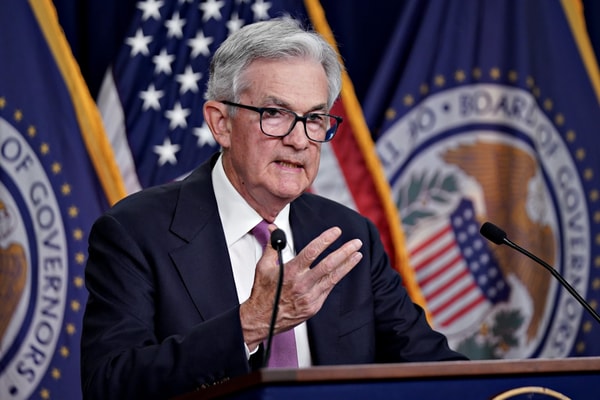


The U.S. Federal Reserve faces its first policy meeting of the year amid a calm monetary backdrop but growing political pressure. While markets broadly expect the central bank to keep interest rates unchanged after three consecutive cuts, tensions surrounding the Fed’s independence have intensified. With political noise in the background and internal divisions potentially widening, experts are weighing in on what this meeting could mean for the future path of U.S. monetary policy.
François Rimeu, Senior Startegist at Crédit Mutuel Asset Management

Barring a major surprise, the Federal Reserve (Fed) is expected to keep its monetary policy unchanged at the January meeting. Economic growth remains solid and the unemployment rate stays at low levels, while inflation continues to run above the 2% target.
Our expectations:
- The Fed is likely to keep the federal funds rate in the 3.50%–3.75% range, a level at the upper end of the neutral zone and consistent with the institution’s latest projections published in December.
- The statement should remain broadly unchanged, reiterating data dependence. However, we do expect the removal of the reference to increased downside risks to employment, in line with a more stable labor market.
- Jerome Powell is expected to strike a cautious and flexible tone. The resilience of economic activity contrasts with more mixed labor market indicators, reinforcing the case for maintaining the current stance in the short term.
In summary:
The decline in the unemployment rate observed in December should ease the Fed’s concerns about the labor market, despite the sharp slowdown in job creation. Following a cumulative 75-basis-point rate cut in the second half of 2025, the Federal Reserve will likely proceed cautiously before introducing further adjustments, especially while inflation data remain distorted by the government shutdown.
The timing of future rate cuts will continue to depend on the joint evolution of the labor market and inflation: a rapid deterioration in labor market conditions could bring forward the start of additional easing, while developments broadly in line with the Fed’s expectations, together with persistently high inflation, would delay further rate reductions.
Eric Winograd, Chief US Economist at AllianceBernstein

With the labor market stable, inflation persistent and above target, and with growth and financial markets strong, there is no reason to cut rates this month now that the policy rate has returned to the range of estimates of neutrality. I expect rate cuts to resume later this year, largely because I do expect some additional weakness in the labor market, but evidence of that outcome will be needed before they move rates again: they are on pause for economic reasons, not political ones.
Fed independence and succession are among the critical issues of 2026. Early last week, the Supreme Court heard arguments in Trump v. Cook. The takeaway from legal analysts was that the Court will likely allow Governor Cook to remain in her position. At the same time, the administration appears to be attempting to indict Fed Chair Powell over alleged criminal conduct related to cost overruns in the renovation of Fed buildings. This is, obviously, an escalation in its attacks on institutional independence. All of this back-and-forth is extraordinary and makes clear just how high the stakes are.
Powell’s term as Chair expires in May, and it is clear that President Trump has no intention of reappointing him. The escalation of attacks on Fed independence, however, has complicated the succession discussion in two ways: the possibility that Powell could remain as a governor until 2028, and the need for a swift confirmation process in the Senate. Names being discussed include Kevin Hassett, Kevin Warsh, Rick Rieder, and, as an internal option, current Governor Christopher Waller. Finding a candidate who is qualified, aligned with the White House, supportive of lower rates, and able to reassure markets about the Fed’s independence will be a considerable challenge. How this equation is resolved will largely determine market reactions in the coming months.
Meanwhile, although the direction of monetary policy appears set for now, it leaves us paying more attention to headlines than to data.