The ECB holds interest rates steady, with all eyes on December: Asset managers’ initial reactions

29 OCT, 2026
By Joanna Piwko from RankiaPro Europe
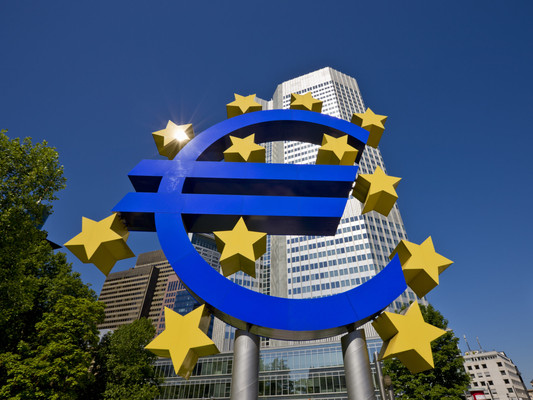


The ECB has opted to leave interest rates unchanged at its October meeting, a decision the market had already priced in. Attention, however, has immediately shifted to two other fronts: Christine Lagarde’s announced resignation and the tug-of-war between inflation that remains uncomfortably high and increasingly tight financial conditions. With no meeting scheduled for November, all eyes are also on December, when the central bank will update its forecasts.
Pressure from energy prices is compounded by fiscal and political uncertainty in France and already modest growth. With so many factors at play, October’s pause is seen more as a technical stop than a change of course, and the debate is focused on how much room remains to tighten monetary policy without slowing economic activity.
Why did the ECB leave interest rates unchanged in October?
The decision was expected, but the balance underpinning it is fragile. Christian Hantel, Head of Global Corporate Bonds at Vontobel’s Fixed Income Boutique, describes it as a "hawkish" test and sums up the ECB’s challenges: "inflation is too high, and France is in the spotlight because of budget debates". In his view, persistent pressure from energy prices is eroding households’ purchasing power.
By contrast, Simon Dangoor, Deputy Head of Investments and Head of Fixed Income Macro Investing at Goldman Sachs AM, warns: "The balance of risks within the ECB is shifting". Concerns about France and tighter financial conditions are increasingly offsetting worries about inflation. Conor Parle, Eurozone Economist at Fidelity International, partly agrees: this tightening "will do some of the ECB’s work" by putting downward pressure on inflation.
Will there be further rate hikes in December?
Among the asset managers already looking ahead to December, Parle (Fidelity) believes that energy and food price pressures will lead the ECB to tighten its policy further, with new forecasts and "a clear message about its willingness to use the tools at its disposal". Felix Feather, economist at Aberdeen Investments, is more specific: "We expect further rate hikes in December and March".
Mike Bell, Head of Market Strategy at RBC BlueBay, agrees on the timing: one hike in December and another in the first quarter, bringing the total to 50 basis points, as gas prices rise rapidly. The market is taking a similar view, with Hantel (Vontobel) noting that the bond market is pricing in around two more rate hikes by mid-2027.
What risks could prevent the ECB from tightening further?
Bell (RBC BlueBay) warns that higher energy and borrowing costs will weigh on already modest growth, to the point that the ECB could be forced to cut rates later in 2027. Hantel (Vontobel) points to evidence in that direction: the ECB's Bank Lending Survey shows that banks are already making access to credit more difficult, while demand is declining.
France is another risk factor. Hantel (Vontobel) believes that fiscal and political risks will keep speculation alive about possible ECB intervention in the bond market, although this would require sovereign stress to become "significantly more intense and widespread". Parle (Fidelity) adds that financial tightening could increase fragmentation between countries, a factor the ECB will have to manage.
What does Lagarde's resignation mean for monetary policy?
Feather (Aberdeen) considers Lagarde's departure more significant news than the rate decision itself. By resigning before the French presidential election, the winner of that election will have no role in choosing the next ECB president, which is particularly important given the political and fiscal uncertainty in France. Even so, Feather does not expect the change at the top to alter the short-term interest rate outlook.
Parle (Fidelity) notes that the search for a successor has already begun and that the leading candidates, Pablo Hernández de Cos and Klaas Knot, would probably provide continuity. Bell (RBC BlueBay) focuses on political risk: whoever succeeds her will need political acumen, given the potential clash between the ECB and Le Pen if she were to win the French election. In his view, the most interesting question is how much influence Lagarde could have on that election, since she is not bound by neutrality.
Conclusion
The October pause leaves the ECB facing three problems at once: energy-driven inflation, the risk of financial fragmentation, and a transition in its presidency. The consensus that December is the key date coexists with a fundamental divergence, as some asset managers see tightening as inevitable while others are giving increasing weight to its cost in terms of growth and credit. For professional investors, the next move will depend less on the inflation figure than on the central bank’s ability to maintain an orderly transmission of its policy.