World Cup Pick: The Goalkeeper’s Dilemma

9 JUL, 2026
By Joan Serfaty from iM Global Partner
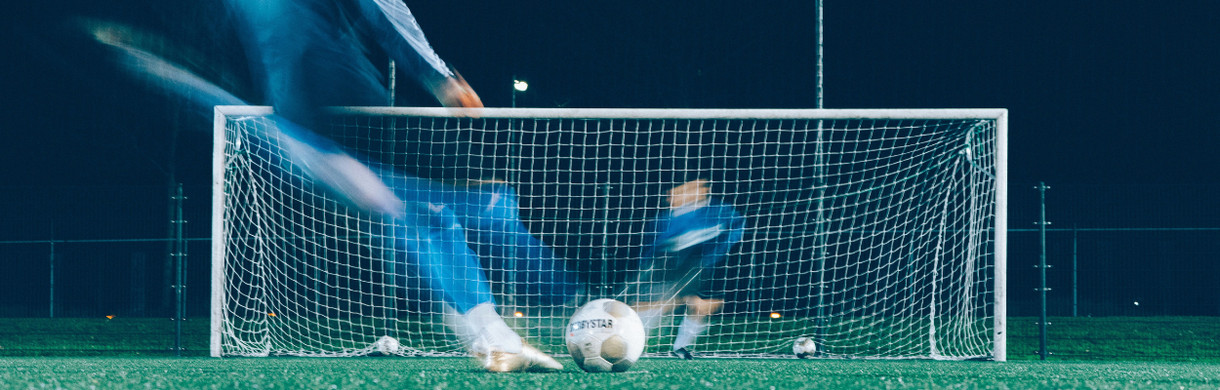


I'll admit it now, before the first shootout of this tournament even arrives: I always want the goalkeeper to dive. It's more exciting, more heroic, more fun to watch a full-stretch save than a keeper standing calmly in the middle of the goal. Left or right, it hardly matters. What he almost never does is the one thing the data says he should: stay exactly where he is.
The Study Goalkeepers Prefer to Ignore
Roughly a third of penalties are struck down the middle, yet goalkeepers dive to one side about 94% of the time. Statistically, a keeper who simply held his ground would stop more shots than one who guessed. The optimal strategy was known, measurable, and almost universally ignored1.
Why? The researchers' answer was not about reflexes but about psychology. A goalkeeper who dives and concedes has visibly done everything he could. A goalkeeper who stands still and concedes looks like he did nothing at all. The dive is not the best way to stop the ball; it is the best way to survive the post-match conversation. Behavioural economists call this action bias: the deep human preference for doing something over doing nothing, even when doing nothing is demonstrably the better choice.
The Portfolio Manager on the Goal Line
Every investor faces penalty kicks. A central bank surprise, a geopolitical shock, a violent sector rotation, a drawdown that dominates the headlines: the ball is struck, and the pressure to move is immediate. And like the goalkeeper, the professional investor knows that the audience is watching. Clients, committees and consultants rarely ask a manager who traded through a crisis to justify the activity. They frequently ask the manager who sat tight to justify the inaction.
The result is an industry structurally biased towards the dive. Yet the evidence in markets echoes the evidence from the penalty spot. Study after study on turnover and market timing points the same way: the more investors trade in response to noise, the more performance leaks away through transaction costs, poor timing and taxes.2 Once you have dived, you cannot un-dive.
There is a subtler cost too. Like the goalkeeper, the manager who acts is not necessarily optimising the outcome; he may be optimising his own career risk. Keynes observed long ago that it is safer for one's reputation to fail conventionally than to succeed unconventionally. Diving is conventional. Standing still takes nerve.
Standing Still Is Not Doing Nothing
Here is the nuance the statistic hides, and it matters for both professions. The goalkeeper who stays central is not being passive. He has made a deliberate, probability-based decision before the ball is struck, and he holds it under extreme pressure. That is not the absence of a strategy; it is the purest expression of one.
The investment equivalent is the discipline of process. A robust strategic allocation, rebalancing rules defined in calm markets rather than improvised in turbulent ones, and a clear distinction between two very different reasons to trade: because the investment case has genuinely changed, or because sitting still has become uncomfortable. The first is judgement. The second is a dive.
None of this means inaction is always right. A keeper who never moved would be as predictable as one who always did, and a portfolio frozen in a world that has structurally changed is rigidity, not discipline. The lesson is narrower and more useful: activity and value added are not the same thing, and in moments of maximum pressure they are most easily confused.
The Final Whistle
So when the shoot-outs arrive this summer, watch the goalkeepers. Every dive is a small monument to the human need to be seen doing something. And when markets deliver their next penalty kick (they always do), it is worth remembering that the investors with the strongest long-term records are rarely the ones who moved the most. They are the ones who decided, in advance and with evidence, when to move and when to hold the line.
Sometimes the bravest position on the pitch, and in the portfolio, is the middle of the goal.
References
1. Bar-Eli, M., Azar, O.H., Ritov, I., Keidar-Levin, Y. & Schein, G. (2007), "Action bias among elite soccer goalkeepers: The case of penalty kicks", Journal of Economic Psychology.
2. Barber, B. & Odean, T. (2000), "Trading Is Hazardous to Your Wealth", Journal of Finance.