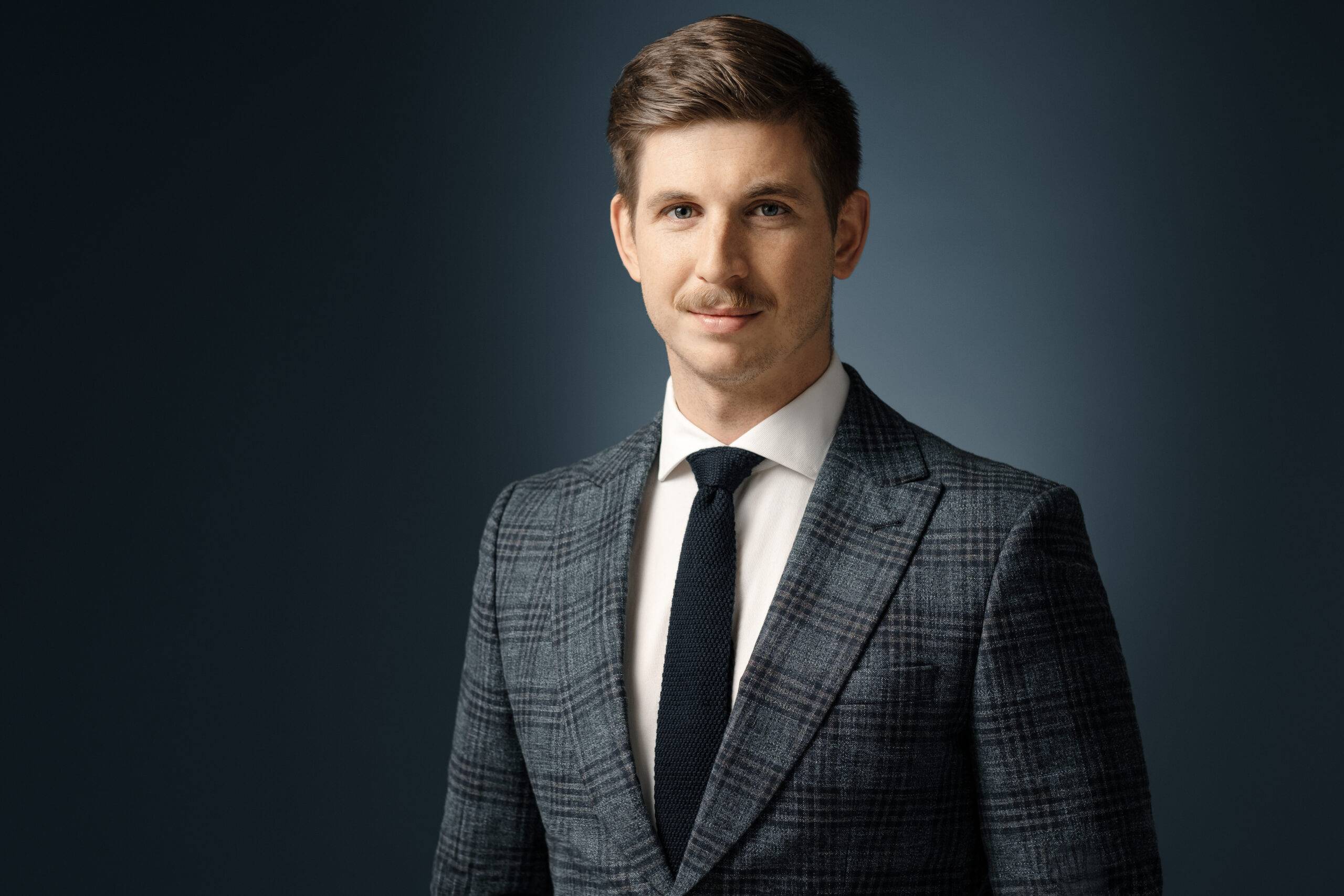
Carlos Tejerizo González from Indosuez Wealth Management is our Advisor of the Month

18 DEC, 2024
By Jose Luis Palmer from RankiaPro Europe


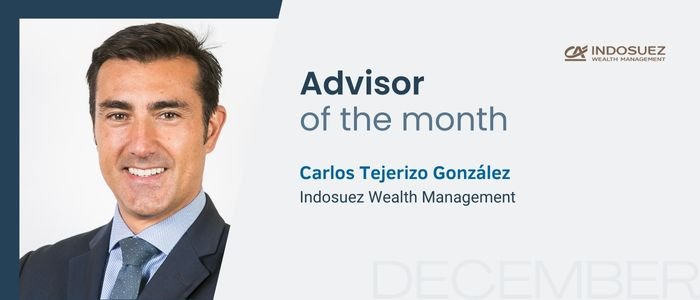
Carlos Tejerizo González was born on June 5, 1976 in Spain and lives in Luxembourg. He is married and has two girl twins of 14 years old.
He has an extensive career in private banking and international wealth management, with over 20 years of experience in leadership roles and financial advisory.
He currently serves as Head of Wealth Management Spain at CA Indosuez (Europe) in Luxembourg, where he leads a team managing a portfolio of high-net-worth individual (HNWI) private and corporate clients, primarily based in Spain.
Previously, he held key positions at prestigious institutions such as Banco Santander International in Miami, Banco Madrid in Spain, UBS AG in Zurich, and Banco Sabadell Atlántico in Spain, showcasing his expertise in team leadership, investment strategy development, and achieving financial targets in international markets.
Carlos holds an International MBA in Finance from IE Business School, complemented by a Wealth Management Diploma from UBS Business University in Zurich and EFPA Certificate. His academic background also includes a Law degree specializing in European Union Law from Universidad San Pablo CEU and a Diploma in Legal and Economic Studies of the European Union from Université Paris I Panthéon-Sorbonne.
He is multilingual, native in Spanish and fluent in English and French, with basic knowledge of German, a skill that has been instrumental in his success in global environments. Beyond his professional endeavours, Carlos is passionate about sports, competing in tennis and enjoying activities such as golf, skiing, and basketball.
With extensive experience in European markets and a proven track record in team leadership and wealth management, Carlos stands out as an expert in private banking and international financial advisory.
Why did you choose to go into financial advice? Did you have other vocations? How were your first steps in the financial sector?
It is curious that when I was studying my Law Degree, my vocation was to direct myself to the Diplomatic career, a people job. But when I graduated, momentarily that part went away.
I started my professional career in Arthur Andersen (Legal) in the area of Tax mostly due to my family background (my father is Law PhD major in Tax and my brother is Tax partner in an international law firm).
Nevertheless, since I did a summer internship in a Santander Private Banking while in the University I started to be very curious and interested in the financial sector and mostly in the wealth management area.
This first professional experience as Tax Advisor helped me very much to finally step in Private banking sector where, for Spanish clients, is extremely important a very well planned and organized tax optimization when realizing financial investments.
In the end, I could mix in my profession both my interests, a people-based and a technical/financial job.
How do you see the current macroeconomic environment? Which macro data do you look at most when advising your clients?
The current macroeconomic environment is marked by moderate global growth, declining yet still elevated inflation, and significant geopolitical challenges influencing economic trajectories. The IMF forecasts global growth to slow to 2.4% in 2024, down from 2.7% in 2023, reflecting a sluggish recovery amid persistent inflationary pressures and geopolitical uncertainties. Global inflation is expected to ease to 5.8% in 2024 but remains above central bank targets, prompting monetary policy adjustments such as interest rate cuts in the U.S. Meanwhile, China is introducing more accommodative monetary measures to stimulate its economy.
Key Indicators to Monitor:
- GDP Growth: Indicates the overall health and expansion pace of an economy. Slower growth typically signals caution in investment strategies.
- Inflation: Metrics like the Consumer Price Index (CPI) reveal the rate of price increases, crucial for understanding purchasing power and interest rate trends.
- Unemployment Rates: Reflect labor market conditions, impacting consumer spending and overall economic resilience.
- Interest Rates: Central bank decisions on rates influence borrowing costs, capital flows, and investment returns.
- Consumer Confidence: Tracks household sentiment and spending intentions, a key driver of economic growth.
- Leading Economic Indicators: Composite measures such as The Conference Board Leading Economic Index help predict future economic trends.
These indicators provide a comprehensive view of the economic landscape, helping to tailor investment and advisory strategies to navigate current challenges and leverage emerging opportunities.
How should investors orient their portfolios for the remainder of 2024?
2024 has been a very good year in the equity markets where for example the S&P surged nearly 28%, driven by strong economic growth, technology giants, fuelled by artificial intelligence advancements. In the same way, the bond yields rose due to inflation concerns and increased government borrowing, marking a departure from the low-rate environment of the past 15 years.
Nevertheless, we still face several market risks such as potential tariffs on major technology stocks, global policy shifts and labour market constraints which pose challenges for sustained market growth. While economic growth remained strong, uncertainties around inflation and geopolitical factors continue to influence market stability.
The investors should maintain until the end of year 2024 a diversified portfolio across asset classes and regions which is crucial to mitigate risks and capitalize on various growth opportunities. They should prioritize high-quality assets, including equities with strong fundamentals and investment-grade bonds, that will enhance portfolio resilience amid market uncertainties.
Given the current environment, investors should balance pursuing growth opportunities with implementing risk management strategies to navigate potential market fluctuations.
What characteristics do you think a good financial advisor should have?
Depending on the personality, background, experience and studies there are many types of financial advisors, but all should possess a mix of technical expertise, interpersonal skills, and ethical principles.
The technical and Industry expertise is key where it is needed a deep understanding of financial products (stocks, bonds, mutual funds, derivatives, insurance, etc.) and wealth management strategies. He/she should keep up-to-date with global markets, economic trends, and geopolitical events to provide informed advice. He/she should have the ability to construct and manage diversified portfolios tailored to client goals and risk tolerance, as well as, being familiar with compliance requirements, tax laws, and financial regulations in relevant jurisdictions.
Our expert has to have a client-centric approach, where he/she should understand and respect client values, goals and concerns to finally provide a tailored advice rather than one-size-fits-all recommendations. This should develop a long-term relationship by consistently deliver value and maintain open lines of communication.
This financial expert should have very strong ethical standards where always have to act in the best interest of clients, prioritizing their goals over personal or institutional gains.
In my opinion, apart from these 3 main characteristics we could also add discretion, problem-solving, adaptability and results-oriented skills.
By combining these traits, a financial advisor or private banker can build trust, deliver superior results, and establish a reputation for excellence in their field.
Which portfolio allocations are most interesting in the current market situation? Which sector do you consider particularly interesting at the moment?
In the current market environment, a balanced and diversified portfolio remains essential to navigate opportunities and risks. Equities continue to offer strong potential, particularly in sectors driven by innovation and robust fundamentals. Allocations should focus on a mix of U.S. and international equities, with a preference for high-quality, growth-oriented stocks. Fixed income also presents opportunities, especially in short to intermediate-term bonds and investment-grade corporate debt, as they provide stability and attractive yields in an uncertain interest rate environment.
The technology sector stands out as particularly interesting, driven by advancements in artificial intelligence and its applications across industries. Companies at the forefront of AI innovation are expected to deliver significant growth. Additionally, the energy sector, including both traditional and renewable energy, offers compelling opportunities as global demand shifts towards sustainability. Financials also show promise, benefiting from favourable economic conditions and potential regulatory easing.
A focus on high-growth sectors like technology, alongside stable allocations in fixed income, can provide a well-rounded strategy. Diversification across regions and asset classes is critical to capture opportunities while managing market volatility.
What does a typical workday look like for you? How do you organize your time?
Instead of workday I would say workweeks where I alternate between office-based responsibilities and client-focused travel.
During office weeks, the focus is on leading and managing the team. This includes setting strategic goals, reviewing portfolios, analysing market trends, and ensuring the team meets performance objectives. Regular meetings are held to coordinate efforts, provide guidance, and assess progress. Attention is also given to developing tailored investment strategies for clients, staying updated on financial products, and collaborating with other departments to deliver comprehensive solutions.
Travel weeks are dedicated to visiting clients and prospects across Spain. These days involve in-person meetings to strengthen relationships, discuss investment plans, and identify new opportunities. The role requires adapting to each client’s needs, from presenting tailored financial solutions to addressing their concerns and explaining market trends. Networking and attending events are also part of expanding the client base and staying connected with high-net-worth individuals.
Balancing these dual aspects—team leadership at the office and personalized client interaction on the road—ensures a well-rounded approach to delivering exceptional service and driving growth. This combination of strategic planning and direct engagement makes the role both challenging and rewarding.
What role do you think regulation plays or should play in driving Socially Responsible Investment?
Regulation plays a crucial role in promoting Socially Responsible Investment (SRI) by ensuring transparency, accountability, and consistency. Frameworks like the EU’s SFDR and Taxonomy set clear standards for sustainable practices, preventing greenwashing and enabling investors to make informed decisions.
Additionally, regulation aligns financial markets with global objectives, such as the Paris Agreement, by mandating ESG risk integration and encouraging sustainable behaviour through incentives like tax benefits. It also deters harmful practices through penalties and compliance requirements.
In summary, regulation drives SRI by creating a clear, credible framework for sustainable investing, fostering trust, and aligning investments with societal and environmental goals.
What do you like to do in your free time?
In my personal life, I greatly enjoy outdoor sports such as tennis, skiing, and golf, which help me stay active and connect with nature. However, what I value most is spending quality time with my family. With my frequent travel commitments, I don’t get to spend as much time with them as I would like, making the moments we share together even more special and meaningful.
Balancing my professional responsibilities with my personal passions and family time is always a priority for me.