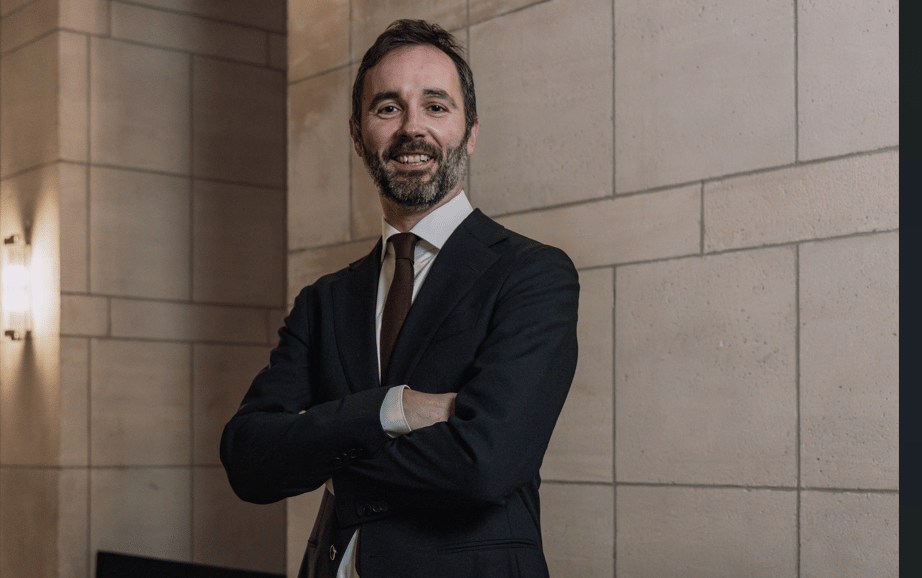
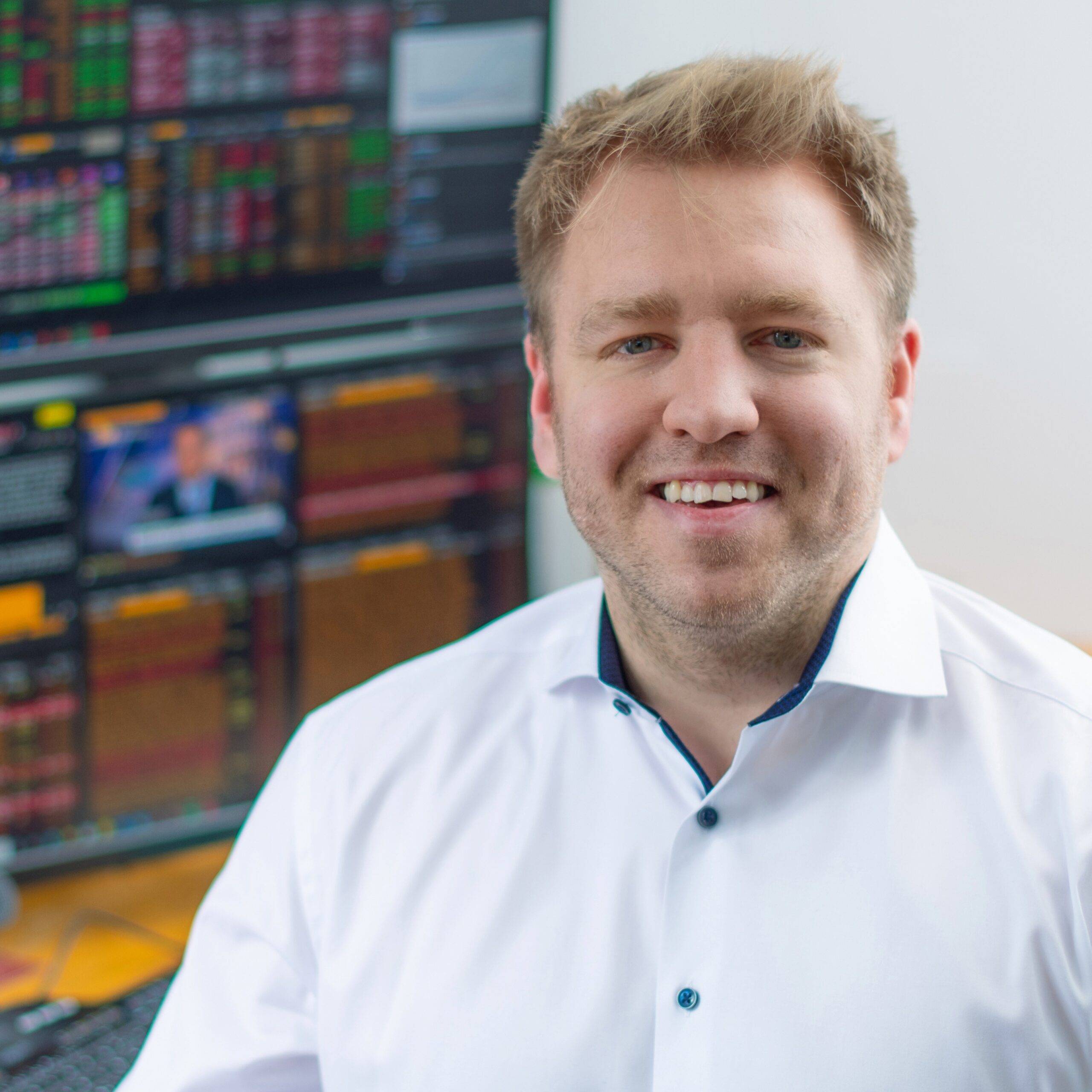
Florian Mayer from Allianz Global Investors is our Fund Manager of the Month

22 MAY, 2024
By Jose Luis Palmer from RankiaPro Europe


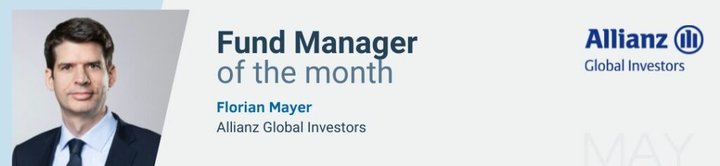
Florian Mayer is an experienced Senior Portfolio Manager who joined Allianz Global Investors in 2023. Since joining Allianz GI, Florian Mayer took over as lead portfolio manager on the Allianz Emerging Markets Equity Opportunities. With a background in quantitative equities and credit analysis, Mayer has held various portfolio management roles in reputable financial institutions such as LGT, DWS Group, and Kathrein Privatbank AG. Florian holds a Master's degree in Wirtschaftsinformatik from Technische Universität Wien and has also obtained the CFA designation from the CFA Institute.
Why and how did you decide to go into the financial sector, did you have other vocations?
I became interested in financial markets at a relatively young age. My father was a bank employee and introduced me to the world of stocks early on. Back then, I attempted to systematically screen the markets but had to realise that this is rather difficult. As a student, I began working in the risk department of an asset management company. Given my studies in business informatics, I sought a field that combined financial markets with quantitative work, and I accepted a job as an analyst for asset-backed securities at the onset of the Great Financial Crisis. Since then, I have held various positions in quantitative portfolio management. So, there has never been another vocation for me.
How do you see the current macroeconomic environment? Which macroeconomic data matter most when it comes managing investment funds?
As a portfolio manager for emerging markets, one deals with a variety of dynamically changing market environments. Currently we are closely monitoring the sensitivity to changes in interest rates as well as commodity prices. However, we generally position our portfolios in a way that minimizes the influence of macro factors that we deem not rewarding in the mid- to long-term to deliver alpha regardless of the environment.
How should investors orient their portfolios in this environment?
For retail investors, it’s always important to be broadly diversified, reducing the need for adjustments based on specific market conditions. The key is to be invested and rely on the power of compounding. Of course, I see this through the eyes of a portfolio manager for emerging markets, but for professional investors making tactical allocations the time to allocate to these markets might be slowly approaching. Growth in China has exceeded expectations, India is the leading G20 country in terms of economic growth and with the already favourable valuation compared to developed markets, sentiment is starting to improve.
What differentiates the Allianz Emerging Markets Equity Fund from the others and what advantages it can bring to an investor’s portfolio in the current scenario?
Our approach provides a truly diversified exposure to long-term successful investment styles like Value, Momentum or Quality and thereby a broad range of sources for excess returns. This is advantageous as it increases consistency and helps with more stable performance results. What sets us apart is our diligent management of undesirable risks, such as those stemming from the macroeconomic environment. The large number of securities within the investment universe, also including small caps, allows us to select from a broad pool of opportunities, while the number of securities in our portfolio ensures diversification. Lastly, we closely collaborate in our research efforts, enabling us to efficiently test and implement new ideas.
Can you give us an example of a position that you have held for a long time in your portfolios and why?
In our portfolios, we typically experience a turnover rate of 60-80%, meaning the portfolio composition can change quite fast. As we are benchmark-oriented, large-cap companies tend to be long-term holdings. However, when discussing current overweights, examples such as PetroChina or Mercado Libre come to mind. PetroChina is intriguing due to the strong performance of energy stocks in emerging markets last year, contrasting with their performance in developed markets where the Energy sector was on the losing side. The company remains attractively valued in comparison, offers a high dividend yield, and scores well in sentiment analysis while maintaining solid quality. Mercado Libre exemplifies the broad spectrum of our investment universe as the company is not part of the benchmark. Over the past year, it has served as a compelling alternative to the underperforming Chinese consumer discretionary sector.
What ratios does a company have to meet to be part of your portfolio?
As we follow a multifactor approach, the combination of individual metrics is more important than any single indicator. Generally, Value stands out as the most prominent factor, yet given the extensive investment universe, we usually discover securities that also demonstrate favorable sentiment and quality metrics.
In your opinion, what will be the next disruptive elements in the asset management industry?
AI is already highly beneficial in identifying new signals, particularly concerning unstructured data, and combining other signals. In my view, the further integration of AI into portfolio construction will play an even larger role going forward.
What do you like to do in your free time?
I enjoy spending time with my two daughters, engaging in sports with them, supporting them in school, or watching a children's movie together. If time allows, I also like to play chess or watch major tournaments.