Sérgio Silva from Silcarv Consulting is our Advisor of the Month

10 SEPT, 2025
By Joanna Piwko from RankiaPro Europe


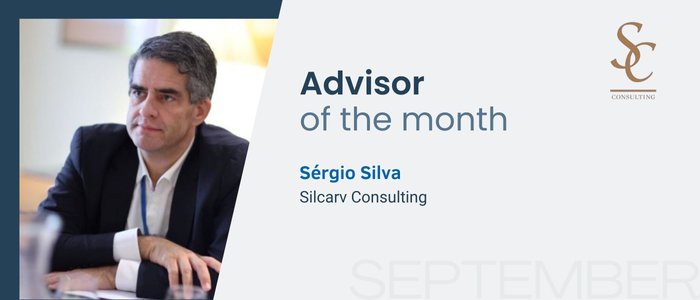
Sérgio Silva began his academic journey in Porto, where he earned a degree in Economics, followed by an Executive master’s in finance to deepen his expertise. With more than 20 years of experience in wealth management, he has developed a strong track record in designing tailored investment strategies and unit-linked life insurance solutions (PPLI) for high-net-worth individuals.
He started his banking career at Banco Best, where he spent over a decade advising clients and leading a team of financial advisors. Later, he joined a Portuguese advisory firm, taking on leadership roles in business development and client advisory.
In 2017, Sérgio co-founded Silcarv Consulting in London, an FCA-regulated firm specializing in cross-border wealth management. There, he focuses on helping private clients and families navigate complex financial situations with bespoke, client-centered solutions.
What made you decide to go into the financial sector? Did you have any other vocations?
Since I was a little boy, my vocation has always been to work in the financial sector, and throughout my youth I prepared myself for that path. Another vocation I considered was teaching, as I have always loved interaction with people and the opportunity to share knowledge. In fact, I am combining both passions today through a Wealth Management Course for Romanians, which I am conducting together with my local partner, Heritage Capital Wealth. Romania is a country I am discovering to be filled with truly remarkable people, and I see a great need and will for financial education and wealth management guidance here
What does a typical workday look like for you? How do you organize your time?
A typical workday for me starts very early no matter where I am in the world, since I travel frequently. Being an early bird, I like to begin the day by reviewing the markets, reading through the latest research, and checking in on portfolios when needed. From there, my schedule usually includes a mix of meetings with partners and clients, which often shape the direction of the day.
Which portfolio allocations are most interesting in the current market situation?
Well, the traditional 60/40 stocks-to-bonds allocation is under scrutiny, as bonds no longer reliably hedge equity volatility. Over the past two years, investors have gained more access to a range of alternative investment solutions, designed to provide meaningful diversification and reduce correlation with traditional markets. This has been particularly relevant in the current environment, where volatility remains elevated following the election of the current U.S. president. So, in today’s landscape of market volatility, geopolitical uncertainty, and uneven correlations, a portfolio that combines global equities, high quality fixed income, alternative investments, and safe haven assets within a flexible allocation framework demonstrates notable stability, diversification, and growth potential.
Which sector do you consider particularly interesting at the moment?
At the moment, I find the utilities sector particularly interesting, given its defensive characteristics and potential for steady cash flows in a volatile macro environment. Additionally, emerging markets continue to offer compelling opportunities. Earlier this year, I noticed some attractive prospects in Indonesia as well as in China A-shares, particularly among small and mid-cap companies, where valuations appeared favorable and growth potential promising.
How should investors orient their portfolios in the current environment?
In today’s complex and uncertain market landscape, investors should adopt a well-diversified and resilient approach, grounding portfolios in high quality, liquid instruments for capital preservation, implementing strategic hedges to protect portfolios from inflation (that likely will rise again and persists higher than normal) and market volatility, and selectively allocating more than usual to alternative assets such as private debt, private equity, infrastructure, and commodities to capture attractive yields, enhance diversification, and generate potential long-term growth.
What characteristics do you think a good financial advisor should have?
This question is often raised by students in the Wealth Management course we are conducting in Romania, as it is one of the first concerns they bring up. A good financial advisor must focus on building strong client relationships, as these are the cornerstone of effective guidance. Trust, above all, forms the foundation of the advisor–client connection, since clients need to feel confident that their advisor is always acting in their best interest.
Equally important is the ability to listen actively. By listening more than speaking, an advisor can truly understand a client’s goals, concerns, and risk tolerance, ensuring that any recommendations are tailored to their unique circumstances. Beyond this, an effective advisor adopts a holistic approach to wealth management, looking not only at individual products or transactions but also at broader aspects such as investment planning, retirement strategies, tax efficiency, estate planning, and risk management. This is why, in our program, we place particular emphasis on Private Placement Life Insurance (PPLI) as a tool within comprehensive financial planning.
Strong communication skills are also indispensable. A skilled advisor must be able to explain complex financial concepts in clear and relatable terms, empowering clients to make confident, informed decisions. Integrity and professionalism go hand in hand with this, as acting ethically, maintaining confidentiality, and consistently prioritizing the client’s best interests are non-negotiable qualities.
Finally, empathy and emotional intelligence are critical in building lasting relationships. Money often carries strong emotions, and by understanding clients’ feelings, managing expectations, and offering reassurance, especially during periods of market volatility, an advisor strengthens trust and fosters long-term confidence. While some clients may see advisors as overly reserved during downturns, those who demonstrate genuine empathy ensure that the relationship remains resilient and enduring
When you have free time, what do you like to do?
In my free time, I enjoy traveling, even though I already travel a lot for work, I still love exploring new places. I also enjoy reading, spending time in nature, cooking as it relaxes me, and discovering new hobbies whenever I can.