Christine Lagarde will advance her departure from the ECB. First reactions from the management companies

18 FEB, 2026
By Joanna Piwko from RankiaPro Europe
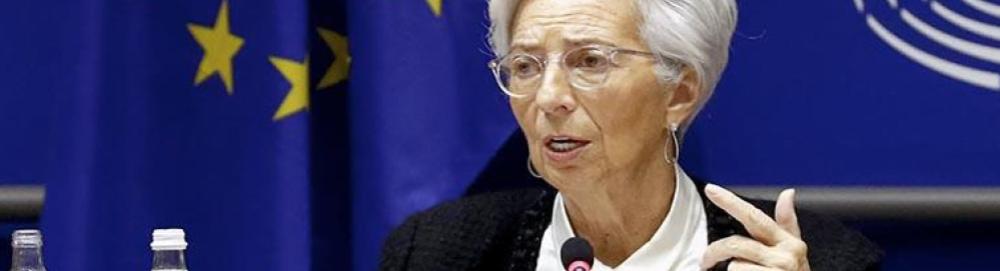


The President of the European Central Bank (ECB), Christine Lagarde, will leave her post before the end of her eight-year term, which officially expires in October 2027, according to the Financial Times. The exact date of her departure remains undefined, but the plan is to leave Frankfurt before the French presidential elections in April 2027. With this, Lagarde would give the French President, Emmanuel Macron, and the German Chancellor, Friedrich Merz, time to reach an agreement on the successor of the European Central Bank.
Although the ECB has avoided confirming these plans and has limited itself to emphasizing that Lagarde "is focused on her mission and has not made any decision about the end of her term", the reports have reignited the debate about the direction of monetary policy in the eurozone and the political dimension of her eventual replacement.
"Speculation about a possible early departure has been circulating for some time. The Financial Times suggests that Lagarde would want her successor to be designated before the French presidential elections of 2027, a plausible reason that highlights the broader risks that this electoral process could generate for European institutions", declares Christian Schulz, chief economist of Allianz Global Investors.
Lagarde, who arrived at the ECB in November 2019 from the IMF and after having held several portfolios in the French government, assumed the presidency with an eight-year mandate that was to consolidate the transition from the Draghi era, marked by negative rates and massive asset purchases.
For Andrzej Szczepaniak, senior economist at Nomura, the impact of an early replacement of Lagarde on the ECB's decision-making would be very limited. "Inflation (HICP) is expected to hover around 2%, albeit marginally below, until the end of the year; GDP growth is forecast to average 0.3% quarter-on-quarter each quarter of this year. Whether with Lagarde or someone else in charge, the ECB will keep rates unchanged this year —and our forecast is that they will also remain unchanged next year—", Szczepaniak maintains.
Who will replace Christine Lagarde at the helm of the ECB?
The most repeated names to succeed Christine Lagarde at the helm of the European Central Bank would come from the two major member states that have never held the presidency of the institution: Spain (Hernández de Cos) and Germany (Nagel, Schnabel, Kukies).
"Schnabel would face legal obstacles, although not insurmountable. We believe that the appointment of Vujcic as vice president makes someone from a small country (for example, Knot) or a more hawkish member (like Nagel) marginally less likely, placing de Cos de facto at the head," says the Nomura expert.
Meanwhile, and according to a Bloomberg survey, the consensus estimates that Knot has slightly more options to be elected than De Cos. "Hernández de Cos would probably put more emphasis on economic balance than on inflation expectations, this could translate into a more interventionist ECB," says the Allianz GI expert.
As an alternative, Klaas Knot (Netherlands) is also mentioned: "Although the Netherlands already held the position with Wim Duisenberg, it has historically been skeptical about unconventional tools and balance sheet expansion, although it adopted a more moderate position after the pandemic," conclude from Allianz GI.